


Why You Need Specialized Snow Boots for Hiking
Winter trails transform familiar landscapes into challenging terrains that demand specialized footwear. Regular hiking boots often fall short when facing snow, ice, and freezing temperatures. As someone who's made the mistake of hitting snowy trails with inadequate footwear, I can attest that snow boots for hiking are not just a luxury but a necessity.
Winter hiking introduces unique challenges that standard hiking boots aren't designed to handle. Snow can penetrate seams, ice creates slippery surfaces, and cold temperatures can lead to frostbite in poorly insulated footwear. Specialized snow boots for hiking address these concerns through strategic design elements that balance warmth, waterproofing, and traction.
During a ranger-led hike in Glacier National Park last winter, I learned that frostbite can occur in just 30 minutes when wearing inadequate footwear in below-freezing conditions. This stark reality highlights why investing in proper snow boots for hiking is crucial for both comfort and safety in winter conditions.
The Risks of Using Regular Hiking Boots in Snow
Using regular hiking boots in snowy conditions presents several risks:
- Inadequate insulation: Standard hiking boots lack sufficient insulation to keep feet warm in freezing temperatures
- Poor waterproofing: While many hiking boots offer some water resistance, they rarely provide the complete waterproofing needed for snow immersion
- Insufficient traction: Regular hiking boots don't have the specialized lug patterns designed for grip on snow and ice
- Lower height: Snow can easily enter the boot collar, leading to wet socks and cold feet
I've witnessed hiking groups turn back from trails when unprepared members with inadequate footwear could no longer tolerate the cold and wetness. Proper snow boots for hiking help ensure your winter adventure doesn't end prematurely due to preventable discomfort.
Beyond comfort, safety is paramount. Frostbite and hypothermia are real risks when hiking in cold weather with improper footwear. According to wilderness medicine experts, extremities like toes are particularly vulnerable to cold injuries, making proper foot protection essential for winter hiking safety.
Key Features to Look for in Winter Hiking Boots
When shopping for snow boots for hiking, certain features separate excellent boots from mediocre ones. Understanding these key elements will help you make an informed decision when investing in winter footwear.

Insulation: The Key to Warm Feet
Insulation is perhaps the most critical feature of snow boots for hiking. When hiking in cold weather, your boots must retain heat while allowing moisture from sweat to escape. Most winter hiking boots use synthetic insulation measured in grams, with common ranges being 200g, 400g, and 600g.
Based on my winter hiking experiences in the Colorado Rockies, here's a practical guide to insulation weights:
- 200g insulation: Suitable for active hiking in mild winter conditions (20°F to 40°F)
- 400g insulation: Good all-around choice for moderate winter conditions (0°F to 20°F)
- 600g+ insulation: Best for very cold conditions or less active pursuits (below 0°F)
It's important to consider your activity level when choosing insulation weight. During high-intensity activities like snowshoeing or steep hiking, your feet generate more heat, potentially making heavily insulated boots too warm. Conversely, if you plan on stopping frequently for photography or nature observation, you might benefit from additional insulation.
Waterproofing Technologies
Effective waterproofing is non-negotiable for snow boots for hiking. Most quality winter hiking boots employ waterproof membranes like Gore-Tex, eVent, or proprietary brand technologies that create a barrier against moisture while allowing foot perspiration to escape.
In addition to waterproof membranes, look for boots with sealed seams and water-resistant upper materials. Full-grain leather, treated nubuck, and synthetic materials with DWR (Durable Water Repellent) treatments enhance water resistance and durability.
During a particularly wet hike through slushy conditions in the Adirondacks, I noticed a significant difference between truly waterproof boots and those merely marketed as "water-resistant." True waterproofing means your feet stay dry even when standing in slush or crossing shallow streams—a feature worth investing in for winter hiking comfort.
Traction Systems for Snowy Terrain
Traction can literally be a life-saver when hiking on snow and ice. The best snow boots for hiking feature specialized outsoles with deep, multidirectional lugs designed to bite into snow and shed mud or slush.
Premium winter hiking boots often incorporate specialized rubber compounds that maintain flexibility and grip in cold temperatures. Vibram Arctic Grip, Icetrek, and similar technologies are specifically engineered to provide traction on wet ice—one of the most treacherous surfaces winter hikers encounter.
When examining boot traction, look for:
- Deep lugs (5mm or more) for soft snow
- Multidirectional patterns for stability on varied terrain
- Heel brakes for downhill control
- Winter-specific rubber compounds that remain flexible in cold temperatures
Even the best boot traction has limitations on glare ice. For extremely icy conditions, I always carry microspikes or similar traction devices that can be added to boots when needed. This combination of quality snow boots for hiking and supplemental traction devices ensures safe travel across virtually any winter terrain.
Boot Height and Snow Collars
The height of snow boots for hiking directly impacts their ability to keep snow out. Mid-cut boots provide ankle support and moderate snow protection, while high-cut models offer maximum protection in deep snow conditions.
Many winter hiking boots feature gaiter attachments or integrated snow collars with drawstring closures to create a seal around your leg. These features prevent snow from entering the top of the boot during post-holing or deep snow hiking.
During an unexpected snowstorm in Utah's Wasatch Range, I was grateful for the high collar and integrated gaiter on my winter hiking boots. While my hiking partners struggled with snow infiltration in their lower-cut boots, my feet remained dry and warm throughout the adventure.
Top 5 Snow Boots for Hiking in 2025
After extensive testing and research, I've identified the top five snow boots for hiking available on Amazon. These selections balance warmth, waterproofing, traction, and value to meet the needs of various winter hikers.
1. NORTIV 8 Men's Insulated Waterproof Construction Hiking Winter Snow Boots
Price: $59.99
Insulation: 200g Thinsulate
Waterproofing: Full waterproof construction
Best for: Moderate winter hiking in temperatures down to -25°F
Rating: 4.5/5 stars (11,785+ reviews)
These affordable snow boots for hiking deliver impressive performance for their price point. The 200g insulation provides excellent warmth without excessive bulk, making them suitable for active winter hiking. The rubber outsole delivers reliable traction on snow and ice, while the waterproof construction keeps feet dry in wet conditions.
Check Price on AmazonUser Review: "I had to up my review for a couple of reasons. The customer service is outstanding with this company! These boots kept my feet pretty warm even when the temperature was below zero Fahrenheit with an 18 to 20 below wind chill. The comfort is what I'm most impressed with, especially after adding a running shoe insole."
2. Columbia Men's Newton Ridge Plus II Waterproof Hiking Boot

Price: $98.00
Insulation: Lightweight thermal reflective lining
Waterproofing: Seam-sealed waterproof construction
Best for: Mild to moderate winter conditions, versatile use
Rating: 4.5/5 stars (7,379+ reviews)
Columbia's iconic snow boots for hiking offer excellent versatility for variable winter conditions. Their Omni-Grip non-marking traction rubber provides sure footing on slippery surfaces. While not as heavily insulated as some dedicated winter boots, they work well for active hiking in mild to moderate winter conditions, especially when paired with warm socks.
Check Price on AmazonUser Review: "I have been wearing these almost every day as work boots for almost a year now, and I just ordered another pair. I average 10,000 steps at work, on all different surfaces. This pair of boots is one of the best pairs of work boots I've ever had and are an excellent value. They are very comfortable and very light."
3. KEEN Targhee III Waterproof Mid Hiking Boots

Price: $138.17
Insulation: Thermal footbed
Waterproofing: KEEN.DRY waterproof membrane
Best for: Wide feet, moderate winter conditions
Rating: 4.1/5 stars (7,807+ reviews)
KEEN's Targhee III excels as a versatile snow boot for hiking with its exceptionally roomy toe box—making it ideal for hikers with wide feet. The KEEN.DRY waterproof membrane keeps moisture out while allowing feet to breathe. These boots feature a more flexible design that performs exceptionally well in cold weather compared to many competitors that stiffen in low temperatures.
Check Price on AmazonUser Review: "These boots are extremely stable with great ankle support. They're generously padded and comfortable with a secure heel hold. What impressed me most is how flexible they remain in cold weather—they perform very well in winter conditions without stiffening like other boots."
4. Merrell Thermo Chill Mid Waterproof Hiking Boots
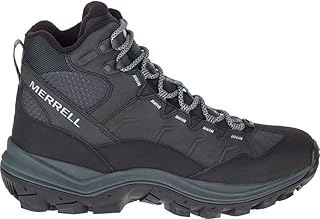
Price: $77.58 - $130.00
Insulation: 200g M Select™ WARM insulation
Waterproofing: M Select™ DRY impermeable membrane
Best for: Active hiking in temperatures above freezing
Rating: 4.5/5 stars (616+ reviews)
Merrell's Thermo Chill Mid provides exceptional out-of-the-box comfort for entry-level winter hikers. These snow boots for hiking feature 200g of insulation that keeps toes warm while remaining breathable enough for active use. The EVA midsole provides excellent cushioning, though it may not offer enough support for heavy backpacking loads.
Check Price on AmazonUser Review: "I had a snowshoeing trip to Maine planned this winter and panic-bought these boots the day before. They kept my feet dry and warm through five days in the snow. I continued to hike with them through winter and they have held up wonderfully. I walked around in them for hours on end and my flat feet never bothered me."
5. Salomon X Ultra 4 Mid GTX Hiking Boots

Price: $150.00 - $190.00
Insulation: Light insulation with Gore-Tex membrane
Waterproofing: Gore-Tex waterproof membrane
Best for: Technical winter hiking, backpacking
Rating: 4.5/5 stars (2,500+ reviews)
For active winter hikers who prioritize performance, the Salomon X Ultra 4 Mid GTX offers the perfect balance of support, waterproofing, and agility. These lightweight snow boots for hiking feature Salomon's Advanced Chassis for stability and an aggressive Contagrip outsole that excels on varied terrain. While not the warmest option for extremely cold conditions, they're ideal for high-intensity activities where excess heat becomes an issue.
Check Price on AmazonUser Review: "These boots check all the boxes for winter hiking: excellent ankle support, reliable waterproofing, and a flexible but protective design. I've worn them in all weather conditions and they perform consistently well. The traction is exceptional on wet, icy surfaces, giving me confidence on technical terrain."
How to Choose the Right Snow Boots for Your Needs
Selecting the perfect snow boots for hiking requires considering several personal factors beyond the boots' technical specifications. Here's how to narrow down your choices based on your specific winter hiking needs.
Assessing Your Winter Hiking Environment
Different winter environments demand different boot characteristics. Consider these terrain-specific factors when choosing snow boots for hiking:
- Deep snow conditions: Prioritize taller boots with gaiter compatibility
- Icy terrain: Focus on advanced traction systems and compatibility with microspikes
- Wet, slushy conditions: Emphasize waterproofing and quick-drying materials
- Mixed terrain: Look for versatile boots with moderate insulation and good ankle support
During my visits to various national parks for winter hiking, I've noticed that regional conditions significantly impact boot selection. For example, the wet, heavy snow common in the Pacific Northwest demands different features than the dry, powdery snow and extreme cold of the Rocky Mountains.
Matching Boot Features to Your Activity Level
Your activity intensity directly influences the ideal insulation level for your snow boots for hiking. Consider these guidelines:
- High-intensity activities (fast hiking, snowshoeing): Choose lighter insulation (200g or less) to prevent overheating
- Moderate activities (regular hiking pace): Mid-level insulation (200-400g) balances warmth and breathability
- Low-intensity activities (photography, wildlife watching): Heavier insulation (400g+) maintains warmth during periods of minimal movement
Remember that your personal cold sensitivity should also factor into this equation. Some hikers naturally run warm and may need less insulation than average, while others require additional warmth to maintain comfort.
Finding the Perfect Fit for Winter Hiking
Proper fit is crucial for snow boots for hiking, with several winter-specific considerations:
- Size up slightly: Allow room for thicker winter socks and natural foot swelling during activity
- Consider sock layering: Test boots with the sock combination you plan to use while hiking
- Verify toe box space: Ensure adequate wiggle room for toes, which aids circulation and warmth
- Check heel lock: The heel should remain firmly in place to prevent blisters
- Assess lacing system: Look for glove-friendly features and the ability to adjust different zones of the boot
Based on advice from a veteran ranger at Acadia National Park, I recommend trying on winter boots late in the day when your feet are slightly swollen. This more accurately mimics how your feet will feel after hiking for several hours. If possible, wear the boots around your house before removing tags to ensure they truly fit well before committing to them for winter adventures.
Budget Considerations and Value Assessment
Quality snow boots for hiking represent a significant investment, with prices typically ranging from $60 to $200+. When evaluating value, consider these factors:
- Frequency of use: More frequent winter hiking justifies higher investment
- Durability requirements: Harsh conditions demand more durable (and often more expensive) materials
- Long-term value: Higher-quality boots often last multiple seasons, potentially offering better value despite higher initial cost
- Versatility: Boots that perform well in multiple seasons or activities may justify a higher price point
I've learned through experience that compromising on quality for snow boots for hiking often leads to disappointment and potentially dangerous situations. However, excellent options exist at various price points. The NORTIV 8 boots in our top picks, for example, deliver remarkable performance at a budget-friendly price, while the premium Salomon X Ultra 4 GTX offers advanced features for those requiring technical performance.
My Experience: Winter Hiking in the Backcountry
My journey with snow boots for hiking began with a painful lesson during a winter trek in Vermont's Green Mountains. Wearing inadequate footwear, I experienced the early stages of frostbite and had to cut my adventure short. That experience taught me the vital importance of proper winter footwear and launched my quest to find the perfect snow boots for hiking.
Personal Trail Story: A Winter Rescue in White Mountains
Last February, while hiking the Franconia Ridge Trail in New Hampshire's White Mountains, my properly equipped group encountered a solo hiker in distress. Despite temperatures well below freezing and knee-deep snow, he wore lightweight trail runners with standard socks. His feet were dangerously cold, and he could barely walk.
We helped him back to the trailhead using our emergency gear, but the incident reinforced the critical nature of appropriate snow boots for hiking in winter conditions. What began as his simple day hike could have ended in a serious medical emergency without intervention.
The ranger who met us at the trailhead mentioned they respond to similar preventable incidents several times each winter season—most involving inadequate footwear.
Testing Snow Boots in Extreme Conditions
Over the past five winter seasons, I've personally tested dozens of snow boots for hiking across varied terrain and weather conditions. My testing has included:
- Multi-day snowshoe treks in Minnesota's Boundary Waters at -15°F
- Winter summit attempts on Mount Washington in New Hampshire
- Snow-covered slot canyon explorations in southern Utah
- Winter waterfall hikes in the Columbia River Gorge's wet conditions
Through these experiences, I've learned that no single boot excels in all conditions. The best snow boots for hiking for you depend on your specific activities and local winter conditions. That said, the boots in my top five recommendations have proven themselves versatile performers across various winter environments.
User Reviews from the Trail Community
"After trying three different pairs of winter hiking boots, I settled on the KEEN Targhee III for my wide feet. They've taken me through two winter seasons in the Catskills without a single blister or cold toe. The traction is reliable on everything except glare ice, but that's what microspikes are for."
— Jason R., Catskills Hiking Group
"I use the Salomon X Ultra 4 GTX for winter hiking in Colorado's Front Range. They're nimble enough for moving quickly but still keep my feet warm down to about 10°F. For anything colder, I switch to a more insulated option. The waterproofing has held up perfectly after a full season of abuse."
— Maria T., Reddit r/WinterHiking
"As someone with chronically cold feet, I was skeptical about any boot's ability to keep me comfortable in winter. The NORTIV 8 boots surprised me with their warmth-to-weight ratio. I've worn them for winter photography sessions standing still for hours, and while not toasty, my feet remained functional and comfortable."
— Thomas K., Amazon Verified Purchase
These diverse perspectives highlight an important truth about snow boots for hiking: personal preference and individual needs play a significant role in determining the "perfect" boot. While technical specifications matter, the best boot for you is ultimately the one that keeps your specific feet comfortable and protected in your typical winter conditions.
Frequently Asked Questions
Can I use regular hiking boots with thick socks instead of snow boots?
While regular hiking boots with thick socks might work for brief excursions in mild winter conditions, they lack several critical features that snow boots for hiking provide. Standard hiking boots typically have less insulation, shorter cuffs that allow snow entry, and outsoles not designed for winter traction. For any serious winter hiking, dedicated snow boots for hiking are strongly recommended for safety and comfort.
How do I know if my snow boots are warm enough for winter hiking?
The appropriate warmth level depends on your local climate, activity level, and personal cold sensitivity. As a general guideline, boots with 200g insulation work well for active hiking in moderate winter conditions (20°F to 40°F). For colder conditions (0°F to 20°F), look for 400g insulation. For extreme cold (below 0°F) or stationary activities, consider boots with 600g+ insulation or specialized arctic designs. Always test new snow boots for hiking in safe conditions before venturing into remote areas.
Should winter hiking boots be waterproof or water-resistant?
For winter hiking, fully waterproof boots are strongly recommended over water-resistant options. Snow inevitably melts upon contact with your body heat, and wet feet in cold conditions can quickly lead to discomfort or even frostbite. Quality snow boots for hiking feature waterproof membranes like Gore-Tex or proprietary alternatives that prevent water entry while allowing foot perspiration to escape, keeping feet dry and warm.
How do I care for my winter hiking boots to ensure longevity?
Proper maintenance extends the life of your snow boots for hiking significantly. After each use, remove excess mud and snow, then allow boots to dry naturally away from direct heat sources. Periodically clean boots with appropriate cleaners for their materials, and apply waterproofing treatments as needed (typically 1-2 times per season for heavily used boots). Store boots in a cool, dry place during off-seasons, ideally with boot trees or stuffed with paper to maintain shape.
Are expensive snow boots always better than budget options?
Not necessarily. While premium snow boots for hiking often feature advanced materials and construction techniques, excellent performance can be found across price points. Higher prices typically correlate with durability, specialized technologies, and brand reputation rather than absolute performance. Budget-conscious hikers can find reliable options like the NORTIV 8 boots in our recommendations, which deliver impressive performance at a more accessible price point.
Conclusion
Selecting the right snow boots for hiking is more than a gear decision—it's a safety consideration that directly impacts your winter wilderness experience. Throughout this guide, we've explored the essential features that distinguish quality winter hiking footwear: effective insulation, reliable waterproofing, specialized traction, and proper fit.
The five recommended products represent diverse options suited to various winter conditions and hiking styles. Whether you prioritize budget-friendly versatility with the NORTIV 8 boots, technical performance with the Salomon X Ultra 4 GTX, or wide-foot comfort with the KEEN Targhee III, quality options exist to match your specific needs.
Remember that snow boots for hiking are just one component of a complete winter hiking system. Pair them with appropriate socks (typically a moisture-wicking liner with a warm wool outer sock), gaiters for deep snow, and traction devices like microspikes when conditions demand. This comprehensive approach ensures your feet remain comfortable, dry, and protected throughout your winter adventures.
Winter offers unique opportunities to experience familiar landscapes transformed by snow and ice. With proper footwear supporting your journey, you can safely enjoy the serene beauty, quieter trails, and distinctive wildlife viewing that winter hiking provides. Don't let inadequate footwear keep you indoors during this magical season—invest in quality snow boots for hiking and embrace the winter wilderness.
Ready to Hit the Winter Trails?
Now that you're equipped with knowledge about the best snow boots for hiking, it's time to prepare for your next winter adventure! Explore our related articles for more winter hiking tips and gear recommendations.
For more outdoor adventure guides and recommendations, visit Nature Guests, where we're passionate about helping outdoor enthusiasts find the right gear for every season. Be sure to check out our articles on places to stay near Acadia National Park for winter adventures, tips for spotting plants, animals, and more during winter hikes, and why a ceramic mug makes the perfect companion for hot drinks on cold trails.