


The Ultimate Guide to Ceramic Mug Benefits: Why They're the Perfect Choice for Your Daily Brew
What Are Ceramic Mugs?
Ceramic mugs have been the preferred choice for coffee and tea enthusiasts for centuries due to their natural properties and reliable performance. Made from clay that's shaped and fired at high temperatures, ceramic mugs come in various forms including porcelain, stoneware, and earthenware. Each type offers slightly different characteristics, but all share the fundamental properties that make ceramic a superior choice for many users.

Types of Ceramic Mugs
Stoneware: This is one of the most durable forms of ceramic. Stoneware mugs are fired at high temperatures (between 2150°F and 2330°F), making them dense and sturdy. They typically have a rustic, earthy appearance and excellent heat retention properties. Stoneware ceramic mugs are less porous than earthenware, which means they're less likely to absorb stains or odors from your beverages.
Porcelain: Porcelain mugs are made from a fine-particle clay and fired at very high temperatures (around 2300°F to 2400°F). They're known for their white color, translucence, and delicate appearance, though they're surprisingly strong. Porcelain offers excellent heat retention and a smooth, non-porous surface that resists staining. Many high-end coffee shops and restaurants use porcelain mugs for their elegant presentation and practical benefits.
Earthenware: This is one of the oldest types of pottery. Earthenware mugs are typically fired at lower temperatures (between 1740°F and 2120°F), making them more porous and less durable than stoneware or porcelain. However, they often feature unique, handcrafted designs and are popular for their rustic charm and artisanal quality. Most earthenware mugs are glazed to make them non-porous and suitable for holding liquids.
Understanding these different types of ceramic mugs can help you make a more informed choice based on your specific needs and preferences. Whether you prioritize durability, aesthetics, or heat retention, there's a ceramic mug type that's perfect for enhancing your daily coffee or tea experience.
Ceramic Mug Benefits Over Other Materials
When choosing the perfect vessel for your morning coffee or evening tea, the material matters significantly. Ceramic mugs offer several distinct advantages over other common materials like glass, stainless steel, and plastic. Let's explore these ceramic mug benefits in detail.
Superior Taste Preservation
Perhaps the most significant advantage of ceramic mugs is their ability to maintain the authentic flavor of your beverages. Unlike metal containers that can impart a metallic taste or plastic that might absorb flavors over time, ceramic is non-reactive and neutral. This means your coffee or tea tastes exactly as it should, with all its complex flavor notes intact.
Research supports that ceramic neither absorbs nor imparts flavors, allowing coffee to taste as intended. This makes ceramic mugs particularly suitable for specialty coffee enthusiasts who want to experience the full spectrum of flavors in their brew. For tea drinkers, this means the subtle notes of your favorite blend remain untainted by the container.
The taste neutrality of ceramic mugs represents one of their most valued benefits, especially compared to alternatives:
- Unlike stainless steel mugs, ceramic doesn't create a metallic aftertaste that can interfere with delicate flavor profiles
- Unlike plastic, ceramic doesn't absorb flavors from previous drinks or release synthetic tastes
- Unlike some treated paper cups, ceramic doesn't contain chemicals that can leach into your beverage
Excellent Heat Retention
Another key benefit of ceramic mugs is their heat retention capability. Ceramic provides moderate insulation that many users find ideal for daily use. The porous nature of ceramic material slows down the heat conduction process, so your drinks stay warmer longer. Air pockets within the ceramic act as natural insulation, preventing heat from escaping too quickly.
While not as insulating as double-walled stainless steel, ceramic mugs strike a perfect balance—they keep your beverage warm longer than glass but won't maintain scalding temperatures that might burn your mouth. The thickness of ceramic also provides a buffer against heat, making the mug comfortable to hold even with hot beverages inside.
Scientific analysis shows that ceramic mugs have a thermal conductivity of approximately 3.8 W/mK, which is higher than glass (1.1 W/mK) but lower than stainless steel (14.3 W/mK). This means ceramic creates what many coffee and tea drinkers consider the ideal drinking window—not too hot initially and not cooling too quickly.
Comfort and Ergonomics
The physical experience of holding a ceramic mug enhances the enjoyment of your beverage. High-quality ceramic mugs typically feature ergonomically designed handles that fit comfortably in your hand. The natural material offers a pleasant tactile experience that synthetic materials simply can't match.
Unlike metal mugs that can become too hot to handle or plastic mugs that can feel cheap and flimsy, ceramic mugs provide a satisfying heft and a natural warmth that enhances the ritual of enjoying hot beverages. The weight and balance of a well-designed ceramic mug contribute to the overall drinking experience, making your morning coffee or evening tea feel more special and mindful.
Health and Safety Benefits
When it comes to your daily beverages, the health implications of your drinkware deserve serious consideration. Ceramic mugs offer significant health and safety benefits that make them a standout choice for health-conscious consumers.
Non-Toxic Material Composition
One of the most important ceramic mug benefits is their non-toxic composition. High-quality ceramic mugs are made from natural clay materials that are generally considered safe and non-toxic. When properly manufactured, ceramic mugs are food-safe and don't leach harmful chemicals into hot beverages.
This stands in stark contrast to some plastic mugs, which may release potentially harmful substances when exposed to heat. Even BPA-free plastics can contain alternative chemicals with questionable safety profiles. Health experts emphasize that properly manufactured ceramic mugs are significantly safer for regular use with hot beverages.
When purchasing ceramic mugs, look for those that specifically state they're lead-free and cadmium-free. Modern reputable manufacturers adhere to strict safety standards, ensuring their products don't contain these toxic heavy metals that were sometimes found in older ceramic pieces or cheaply made imports.
Temperature Safety
Ceramic mugs also offer temperature-related safety benefits. The material warms up gradually and distributes heat evenly, reducing the risk of burns compared to metal mugs that can become extremely hot to the touch. The handles of ceramic mugs typically stay cooler than the body, providing a safe gripping point even when the beverage inside is very hot.
The moderate heat retention of ceramic also allows beverages to cool to a safe drinking temperature relatively quickly, while still maintaining warmth long enough to enjoy your drink. This natural temperature management helps prevent scalding, a common concern with highly insulated stainless steel mugs that can keep liquids at dangerously hot temperatures for extended periods.
Hygiene and Cleanliness
The smooth, glazed surface of ceramic mugs prevents bacteria from embedding in tiny crevices. Unlike plastic mugs that can develop scratches and grooves where microorganisms can hide, ceramic's non-porous surface stays clean and hygienic with proper washing.
High-quality ceramic mugs are also dishwasher safe, allowing for thorough sanitization at high temperatures. This makes them an excellent choice for maintaining proper hygiene in your drinkware. The material doesn't retain odors or stains when properly cared for, ensuring a fresh, clean drinking experience with every use.
For those with sensitivities or allergies, ceramic provides a neutral, hypoallergenic option that doesn't introduce additional compounds or allergens into your beverages. This makes ceramic mugs an ideal choice for anyone concerned about potential reactions to synthetic materials or metals.
Environmental Impact
In our increasingly environmentally conscious world, the sustainability of our choices matters more than ever. The environmental benefits of ceramic mugs are substantial when compared to alternatives, particularly disposable cups and plastic options.
Longevity and Waste Reduction
One of the most significant ceramic mug benefits from an environmental perspective is their exceptional longevity. A well-made ceramic mug can last for decades with proper care, dramatically reducing waste compared to disposable alternatives. Environmental studies indicate that a ceramic mug needs to be used approximately 18 times to offset its production environmental impact compared to paper cups. Beyond this break-even point, every additional use represents environmental savings.
Consider the numbers: The average person using a ceramic mug instead of disposable cups can prevent 150+ single-use cups from entering landfills each year. Over the lifetime of a good ceramic mug, this number can climb into the thousands. When we multiply this across households worldwide, the waste reduction potential becomes enormous.
Unlike plastic mugs that degrade over time and may need frequent replacement, ceramic's durability means fewer resources consumed over time. This longevity is one of the key reasons environmentalists recommend ceramic as a sustainable drinkware option.
Natural Materials and Production Process
Ceramic mugs are made primarily from clay, a natural and abundant resource. While the firing process does require significant energy, modern manufacturers are increasingly adopting more efficient kilns and sustainable practices. Many artisanal ceramic producers prioritize eco-friendly production methods, including solar power for their facilities and water recycling systems.
Unlike plastic production, ceramic manufacturing doesn't rely on petroleum products or create microplastics that can harm ecosystems. The natural materials used in ceramic production are generally less harmful to the environment throughout their lifecycle compared to synthetic alternatives.
It's worth noting that locally produced ceramic mugs offer additional environmental benefits by reducing transportation emissions. Many regions have local pottery traditions and artisans, allowing consumers to support local economies while minimizing the carbon footprint of their purchases.
End-of-Life Considerations
At the end of their useful life, ceramic mugs don't contribute to the growing problem of plastic pollution. While not easily recyclable in conventional systems, broken ceramic can be repurposed in creative ways, such as mosaic art projects, garden drainage material, or even as aggregate in certain building materials.
Some specialized facilities can process ceramic waste for use in construction materials, though this infrastructure isn't widely available yet. The good news is that because ceramic is made from natural materials, it will eventually break down into natural components over very long periods, unlike plastics that can persist in the environment for hundreds of years while leaching chemicals.
For the environmentally conscious consumer, choosing ceramic mugs represents a commitment to sustainable living practices. The initial environmental cost of production is amortized over many years of use, making ceramic a responsible choice for reducing your ecological footprint while enjoying your daily beverages.
Top 5 Ceramic Mugs on Amazon
After extensive research and analysis of customer reviews, I've compiled a list of the top 5 ceramic mugs available on Amazon. These selections offer excellent quality, design, and value, showcasing the best ceramic mug benefits discussed throughout this article.
1. LIFVER 21 Oz Large Ceramic Coffee Mug Set

Rating: 4.8/5 stars (440+ reviews)
Capacity: 21 oz
Key Features:
- Excellent heat retention with thick walls
- Large, comfortable handle
- Smooth glaze prevents coffee stains
- Microwave, dishwasher, and freezer safe
- Lead and cadmium-free construction
Perfect For: Coffee lovers who prefer large servings and appreciate durability.
Customer Review: "I love the size and the color and design. The narrow top keeps my beverages warmer. These mugs are excellent at retaining heat, keeping your beverage warm for a more extended period than other materials."
2. vancasso 16 oz Coffee Mugs Set of 6

Rating: 4.9/5 stars (25+ reviews)
Capacity: 16 oz
Key Features:
- Beautiful bohemian patterns and designs
- High-quality ceramic that resists stains and odors
- Extra-wide handle for comfortable grip
- Dishwasher and microwave safe
- Perfect gift set with premium packaging
Perfect For: Style-conscious individuals who appreciate unique designs and artistic details.
Customer Review: "The patterns are just so charming, each a little different but all in the same family. The shape of the mugs isn't distinctive, but I love that the handles of each match the dominant color of the cup's pattern. This set is just my taste, and I can't imagine anyone not loving them."
3. Hasense Ceramic Coffee Mugs Set of 6
Rating: 4.8/5 stars (430+ reviews)
Capacity: 15 oz
Key Features:
- Set of 6 in beautiful assorted colors
- Ergonomically designed handles for comfortable grip
- High-quality porcelain construction
- Microwave and dishwasher safe
- Perfect for various hot beverages
Perfect For: Families who need a set of high-quality mugs in various colors to distinguish each person's cup.
Customer Review: "Love these coffee mugs, got them with the dish set and they are fantastic! What's so great is that they don't get HOT to touch in the microwave. If I want to reheat my coffee in the microwave, there is nothing worse than burning your hands on the mug. This isn't an issue with this brand!"
4. AmorArc Extra Large Coffee Mugs Set of 6
Rating: 4.7/5 stars (1,870+ reviews)
Capacity: 20 oz
Key Features:
- Extra large capacity for serious coffee drinkers
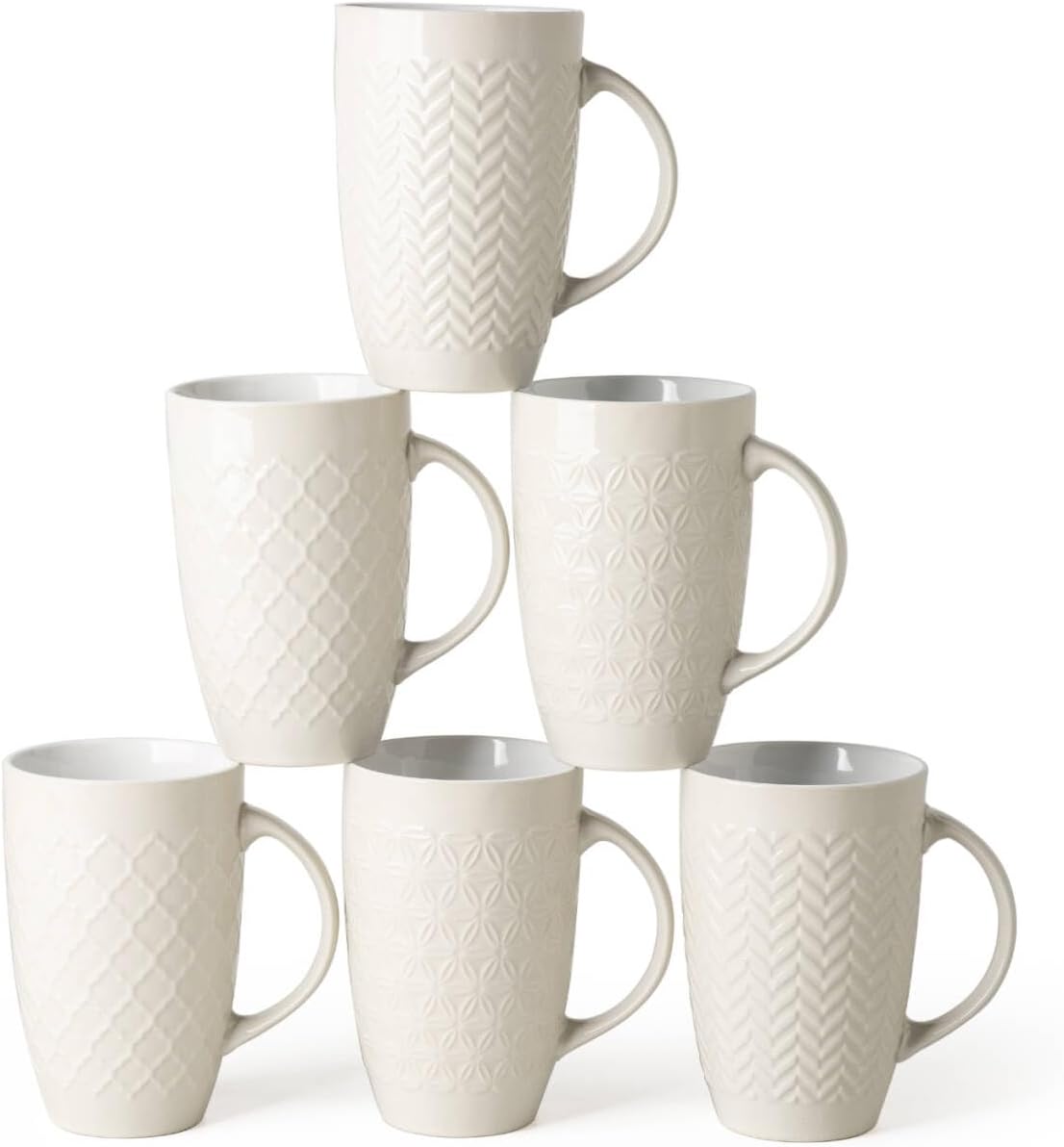
- Beautiful textured geometric patterns
- Lead and cadmium-free ceramic
- Large open handle for comfortable grip
- Dishwasher and microwave safe
Perfect For: Those who need a large mug that combines style and functionality.
Customer Review: "I was very pleased finding these coffee mugs, as I looked everywhere for extra large coffee mugs and only these fit the bill! They hold twice as much as your average mug, have a large, open handle to grip on to, and the design and colors available are beautiful."
5. MELETĒ Stoneware Mug Set of 4

Rating: 4.4/5 stars (20+ reviews)
Capacity: 14 oz
Key Features:
- Rustic minimalist style in oatmeal cream color
- High-quality stoneware construction
- Comfortable ergonomic handle
- Microwave and dishwasher safe
- Perfect for both hot and cold beverages
Perfect For: Those who appreciate a rustic, minimalist aesthetic with a focus on quality craftsmanship.
Customer Review: "These have nice heavy walls which are warm but not too hot, making them perfect to hold. The oatmeal color is cozy with a boho or shabby chic vibe. The thick walls means they will be durable, and we haven't broken one yet after several months of use."
Each of these ceramic mugs exemplifies the benefits discussed throughout this article, from excellent heat retention and taste preservation to durability and aesthetic appeal. The variety in designs, sizes, and prices ensures there's a perfect ceramic mug option for every preference and budget.
My Experience with Ceramic Mugs
After years of experimenting with various types of drinkware, I've developed a deep appreciation for ceramic mugs and their unique benefits. My journey with ceramic mugs began during a camping trip to one of America's least visited national parks, where a park ranger introduced me to the concept of mindful coffee drinking using a handcrafted ceramic mug.
The first thing I noticed was how different coffee tasted in a ceramic mug compared to my usual metal travel tumbler. The flavors were clearer, more vibrant, and I could detect subtle notes I'd never noticed before. The ranger explained that ceramic's non-reactive nature preserves the true flavor of coffee without adding metallic undertones or absorbing previous flavors like plastic often does.
Seasonal Ceramic Mug Rituals
I've found that ceramic mugs enhance seasonal beverage experiences in unique ways:
Spring: During crisp spring mornings in my garden, I enjoy floral teas in a light blue ceramic mug that keeps the tea warm while I tend to my plants. The natural feel of ceramic connects me to the earth as new growth emerges.
Summer: For iced coffee in summer, I pre-chill my ceramic mugs in the refrigerator. The thick walls of the mug keep the drink colder longer than glass would, perfect for enjoying on my porch while watching birds visit my feeder.
Fall: Autumn brings spiced cider and pumpkin-spiced lattes, which I serve in amber-colored ceramic mugs. The mugs' excellent heat retention is perfect for those increasingly cool evenings while hiking in Shenandoah National Park.
Winter: During winter, my large ceramic mugs come into heavy rotation for hot chocolate and mulled wine. I've found that wrapping cold hands around a warm ceramic mug provides comfort that plastic or metal simply cannot match.
One of my most valuable lessons came from a pottery workshop I attended near Acadia National Park. The potter explained that the slight variations in handmade ceramic pieces aren't flaws but character marks that make each mug unique. Since then, I've come to appreciate the slight irregularities in my handcrafted ceramic collection, knowing each one tells a story of its creation.
I've also noticed practical benefits in my daily routine. When I switched from plastic travel mugs to a ceramic travel mug with a silicone lid, I stopped experiencing the persistent coffee stains and lingering odors that plagued my previous drinkware. The ceramic cleans completely with just soap and water, looking like new even after years of daily use.
During a particularly cold winter camping trip, I learned another valuable lesson about ceramic mugs. While my camping companions with metal mugs complained about their beverages cooling too quickly, my ceramic mug kept my tea warm for nearly 45 minutes in below-freezing temperatures. This experience taught me the importance of proper hydration systems and quality drinkware for outdoor adventures.
Throughout my experiences, I've found that ceramic mugs are more than just vessels—they're companions for daily rituals that enhance both the practical and emotional aspects of enjoying beverages. Their ceramic mug benefits extend beyond the physical properties to include the way they connect us to traditions of craftsmanship and mindful consumption.
What Users Are Saying About Ceramic Mugs
Amazon Review - LIFVER Ceramic Mugs
"I love having a hot cup of tea/coffee on a chilly morning in this mug. The shape is great for warming your hands and it holds quite a bit. I love the design and colors. My favorite mug right now. These mugs are excellent at retaining heat, keeping your beverage warmer for a more extended period than other materials."
Rating: ★★★★★
Reddit Comment - r/Coffee
"I've tried all sorts of fancy drinkware, but I always come back to my basic ceramic mugs. There's something about how coffee tastes in ceramic that can't be matched. No metallic aftertaste, no plastic smell, just pure coffee flavor. Plus, I can actually tell when my coffee is at the right temperature by feeling the outside of the mug—something you can't do with insulated options."
Upvotes: 437
Quora Answer
"As a barista for 15 years, I can confirm that ceramic is the gold standard for serving coffee. The material doesn't interfere with the flavor profile, provides good heat retention without burning hands, and offers that satisfying weight that enhances the overall experience. When customers ask me what mugs to buy for home use, I always recommend high-quality ceramic over anything else."
Views: 2.4K
Pros and Cons of Ceramic Mugs
Pros
- Superior taste preservation - Doesn't alter the flavor of beverages
- Excellent heat retention - Keeps drinks warm longer than glass
- Non-toxic materials - Free from harmful chemicals (when properly made)
- Environmentally friendly - Long-lasting and made from natural materials
- Aesthetic appeal - Available in countless designs and styles
- Good for health - No leaching of chemicals into hot beverages
- Microwave safe - Convenient for reheating beverages
- Dishwasher safe - Easy to clean and sanitize
- Comfortable handling - Natural feel and good ergonomics
- Durable - Can last for years or decades with proper care
Cons
- Breakability - Can chip or break if dropped
- Weight - Heavier than plastic alternatives
- Not always portable - Not ideal for travel without special carriers
- Initial cost - Can be more expensive than basic plastic options
- Quality varies - Lower-quality ceramics may contain harmful substances
- Potential for thermal shock - Extreme temperature changes can cause cracking
- Staining - Light-colored ceramics may stain from coffee or tea over time
- Storage space - Takes up more cabinet space than stackable options
- Not all designs are ergonomic - Poor handle design can affect comfort
- Not as insulating as double-walled options - Beverages cool faster than in vacuum-insulated containers
Frequently Asked Questions
Are ceramic mugs safe for daily use?
Yes, high-quality ceramic mugs are generally very safe for daily use. Modern ceramic mugs from reputable manufacturers are made with food-grade materials that don't contain harmful substances like lead or cadmium. To ensure safety, look for mugs that specifically mention being lead-free and cadmium-free, especially if they feature colorful glazes. Ceramic mugs made in countries with strict manufacturing standards typically adhere to safety regulations for food contact materials. For additional peace of mind, avoid using ceramic mugs with visible damage, cracks, or crazing, as these can harbor bacteria or potentially expose you to materials beneath the glaze.
How can I prevent my ceramic mug from staining?
To prevent staining in ceramic mugs, rinse them promptly after use, especially with dark beverages like coffee or tea. For daily cleaning, use hot water and mild dish soap with a soft sponge. Avoid abrasive scrubbers that can damage the glaze. For existing stains, create a paste with baking soda and water, apply to stained areas, and let sit for 15-30 minutes before rinsing. Alternatively, fill the mug with equal parts white vinegar and hot water, let soak overnight, then wash normally. Regular deep cleaning with denture tablets dissolved in water can also prevent buildup. Always follow manufacturer's cleaning guidelines, and consider using darker-colored mugs if you frequently drink coffee or tea, as they mask stains better than white or light-colored ceramics.
How do ceramic mugs compare to glass mugs for taste?
Both ceramic and glass mugs are excellent for preserving beverage taste as they're non-reactive materials that don't impart flavors. However, there are subtle differences in the drinking experience. Ceramic provides a slightly more insulated experience that some coffee experts believe allows flavors to develop more fully as the beverage gradually cools. The slightly porous nature of some ceramics can also contribute to the sensory experience. Glass offers complete flavor neutrality and the visual appeal of seeing your beverage, which enhances appreciation of color and clarity in drinks like tea. Glass conducts heat differently, often cooling beverages more quickly than ceramic. Personal preference plays a significant role—some connoisseurs prefer ceramic for coffee and glass for tea, while others have different preferences based on the specific beverage varieties and serving temperatures.
Can ceramic mugs be used in microwaves?
Most ceramic mugs are microwave safe, making them convenient for heating beverages. High-quality ceramic distributes heat evenly without damaging the mug's structure. However, not all ceramic mugs are suitable for microwaves. Avoid using mugs with metallic decorations, gold or silver trim, or metallic glazes, as these can cause sparking and damage your microwave. Antique or very old ceramic pieces might contain lead in their glazes, which could potentially leach into food when heated. When using a new ceramic mug in the microwave, test it by heating it with water for 30 seconds, then carefully checking if the mug becomes excessively hot while the water remains cool. Always check the manufacturer's guidelines for specific care instructions regarding microwave use. If a mug doesn't explicitly state "microwave safe," it's best to err on the side of caution.
What's the difference between porcelain and ceramic mugs?
Porcelain and ceramic mugs differ in composition, manufacturing process, and characteristics. Porcelain is actually a specialized type of ceramic made from kaolin clay, fired at extremely high temperatures (2,200-2,400°F). This results in a white, fine-grained, translucent material that's notably harder, thinner, and more chip-resistant than standard ceramics. Porcelain typically has a more refined, elegant appearance and smoother finish. Traditional ceramic mugs are made from various clay types, fired at lower temperatures (1,800-2,100°F), resulting in a more opaque, thicker, and slightly more porous material. Ceramic mugs are generally more affordable, available in wider variety of colors and textures, and often have a more casual, rustic aesthetic. Both materials are excellent for beverages, but porcelain tends to be more delicate and formal, while ceramic is typically more durable for everyday use and often provides better insulation due to its thicker walls.
How to Choose the Perfect Ceramic Mug
Selecting the ideal ceramic mug involves considering several factors beyond just appearance. Here's a comprehensive guide to help you make the best choice:
Size and Capacity
Consider your typical beverage consumption patterns when choosing mug size. Standard mugs range from 8-12 ounces, while larger options can hold 14-20 ounces or more. If you enjoy large lattes or want fewer refills, opt for a larger capacity. For espresso drinkers or those who prefer smaller servings, a smaller mug might be more appropriate. Remember that larger mugs will be heavier, especially when filled, which might affect comfort during extended use.
Shape and Ergonomics
The physical design of the mug significantly impacts your drinking experience. Look for these key ergonomic features:
- Handle size and shape: Ensure the handle comfortably accommodates your fingers (typically 2-3 fingers should fit)
- Rim thickness: Thinner rims generally provide a better drinking experience than thick, clunky edges
- Weight distribution: The mug should feel balanced, not top-heavy, even when full
- Wall thickness: Thicker walls provide better insulation but increase weight
- Base stability: A wider base reduces the risk of tipping
Quality Indicators
High-quality ceramic mugs exhibit certain characteristics worth looking for:
- Uniform glaze: The glaze should be consistent without bubbling, crazing, or uneven application
- Smooth finish: Run your finger along the rim and inside—quality mugs shouldn't have rough spots
- Sound test: Gently flick the side of the mug—quality ceramics produce a clear, bell-like ring rather than a dull thud
- Even coloring: Colors should be consistent throughout the design
- Safety certifications: Look for indications that the mug is lead-free, cadmium-free, and food safe
Maintenance Requirements
Different ceramic mugs have varying care needs that might influence your choice:
- Dishwasher safety: Most modern ceramic mugs are dishwasher safe, but handmade or specially decorated pieces may require hand washing
- Microwave compatibility: Check if the mug is microwave safe, especially if it has metallic decorations
- Stain resistance: Darker colors and certain glazes resist staining better than others
- Chip resistance: Higher-fired ceramics like porcelain and high-quality stoneware typically resist chipping better
Intended Use
Consider how and where you'll primarily use your ceramic mug:
- Home use: Aesthetics and personal preference may take priority
- Office use: Durability, spill resistance, and microwave safety become more important
- Travel: If you need a ceramic option for commuting, look for ceramic travel mugs with secure lids
- Outdoor activities: Consider more durable stoneware options if you'll use the mug while camping or for outdoor events
By carefully considering these factors, you can select a ceramic mug that not only suits your aesthetic preferences but also enhances your beverage enjoyment through functional excellence. Remember that the perfect mug often becomes a daily companion, so it's worth investing time in finding one that truly meets your needs.
Conclusion
After exploring the many benefits of ceramic mugs, it's clear why they remain the preferred choice for coffee and tea enthusiasts worldwide. The combination of superior taste preservation, excellent heat retention, health safety, environmental benefits, and aesthetic appeal makes ceramic mugs stand out in a crowded field of drinkware options.
The ceramic mug benefits we've discussed throughout this article—from their non-reactive nature that preserves authentic beverage flavors to their sustainable, long-lasting construction—demonstrate why ceramic has been the material of choice for drinking vessels for centuries. While modern alternatives like stainless steel and plastic offer certain advantages in specific situations, ceramic mugs provide the best all-around experience for daily use at home or in the office.
When selecting ceramic mugs, remember to consider quality indicators like uniform glazing, proper weight distribution, and safety certifications. The perfect ceramic mug combines functionality with personal style, enhancing not just your beverage but also the ritual surrounding it. Whether you prefer artisanal handmade pieces or modern designs from established brands, the right ceramic mug can become a cherished daily companion.
As we become increasingly concerned about health and environmental impacts, ceramic mugs offer peace of mind with their natural composition and durability. By investing in high-quality ceramic mugs and caring for them properly, you're not only enhancing your daily beverage experience but also making a sustainable choice that reduces waste from disposable alternatives.
I hope this guide has helped you understand the many advantages of ceramic mugs and assisted you in finding the perfect option for your needs. Whether you're a casual coffee drinker or a serious connoisseur, the right ceramic mug can elevate every sip of your favorite beverage. For more information about outdoor experiences and quality gear recommendations, don't forget to explore our other guides on ceramic mug benefits and beyond.