

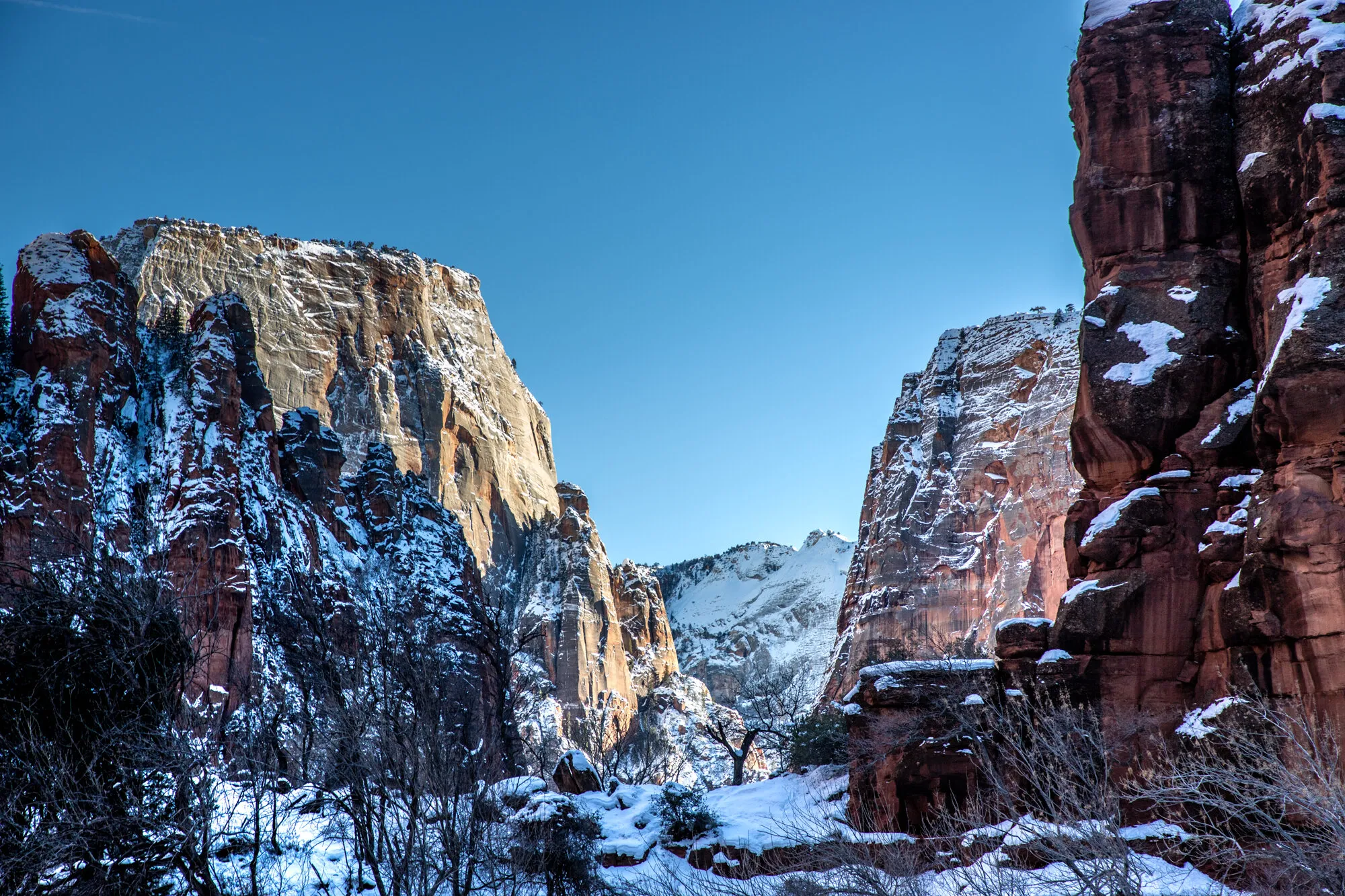
Why Visit Zion National Park in Winter

When I first discovered the magic of Zion National Park winter, it completely changed my perspective on when to visit Utah's national parks. After experiencing the park during peak season crowds, winter felt like discovering a completely different place – one where I could actually hear the Virgin River flowing and enjoy the towering canyon walls in peaceful solitude.
Escape the Crowds
Winter is definitively the least crowded time to visit Zion. While summer months see over 500,000 visitors, winter months typically see fewer than 50,000 people, giving you that authentic wilderness experience.
Drive Your Own Vehicle
From November through February, the shuttle system is suspended, meaning you can drive the scenic canyon road at your own pace, stop wherever you want, and avoid waiting in shuttle lines.
The transformation that occurs in Zion National Park winter is truly remarkable. The red sandstone formations take on deeper, richer hues against the occasional dusting of snow, creating photography opportunities that simply don't exist during other seasons. I've witnessed mornings where frost clings to the canyon walls, making them appear almost otherworldly in the early light. For photographers planning winter national park trips, consider exploring detailed maps of Yosemite National Park as well, since both parks offer exceptional winter photography opportunities.
Money-Saving Benefits
Accommodation rates drop by as much as 60-70% during winter months. Hotels that charge $300+ per night in summer often offer rooms for $80-120 in winter, making it the most budget-friendly time to experience luxury lodging near the park.
Perhaps most importantly, visiting Zion National Park winter allows you to experience the park as it was meant to be experienced – in quiet contemplation of its natural beauty. The absence of crowds means you can actually hear the sounds of nature: water trickling down canyon walls, wind through the cottonwood trees, and the calls of the many birds that make Zion their winter home.
Winter Weather and What to Expect

Understanding Zion National Park winter weather patterns is crucial for planning a successful trip. During my many winter visits, I've experienced everything from sunny 60°F days where I hiked in a t-shirt to snowy mornings where traction devices were essential for safe hiking.
Average Winter Temperatures
What makes Zion National Park winter weather particularly interesting is the dramatic temperature variations you'll experience throughout the day. Morning temperatures often start below freezing, but by afternoon, you might find yourself hiking comfortably in light layers. This temperature swing can be as much as 30-40 degrees in a single day.
Precipitation Patterns
Winter brings nearly half of Zion's annual precipitation, with December through March being the wettest months. Snow typically falls 2-3 times per year but rarely accumulates at lower elevations for more than a few hours.
- Average snowfall: 2-5 inches annually
- Rain is more common than snow
- Higher elevations retain snow longer
Elevation Effects
Zion's elevation ranges from 3,700 to 8,700 feet, creating distinct microclimates. The main canyon floor stays warmer, while higher trails like Angels Landing can have snow and ice even when the valley floor is clear.
Winter Safety Considerations
Hypothermia is the leading cause of winter outdoor fatalities. During my winter visits to Zion National Park winter, I always pack extra layers and avoid cotton clothing. Wool base layers and insulating mid-layers are essential, even on sunny days, as weather can change rapidly.
One of the most magical aspects of Zion National Park winter weather is how it transforms familiar landscapes. I've hiked the same trails in summer and winter, and they feel like completely different places. Ice formations hanging from canyon walls, snow highlighting the intricate patterns in sandstone, and the crisp, clear air that makes distant peaks appear crystal sharp – these are experiences you simply cannot get during any other season.
Best Winter Activities and Hiking Trails

Zion National Park winter hiking offers unique opportunities that summer visitors never experience. During my winter explorations, I've discovered that many trails actually become more interesting in winter, with frozen waterfalls, snow-dusted red rocks, and wildlife that's more active during the cooler months. Winter hiking requires proper preparation, and I recommend investing in quality traction devices like ICETrekkers Spikes Ice Traction cleats to ensure safe passage on icy trail sections.
Top Winter Hiking Trails
Canyon Overlook Trail
Distance: 1 mile roundtrip | Difficulty: Moderate
This is my absolute favorite winter hike in Zion. The trail offers spectacular views of Pine Creek Canyon and becomes even more dramatic with snow on the surrounding peaks. Winter morning light hitting the canyon walls from this vantage point is simply breathtaking.
Emerald Pools Trails
Distance: 1.2-3 miles depending on route | Difficulty: Easy to Moderate
The pools take on an entirely different character in winter. I've seen them completely frozen over and witnessed ice formations that create natural sculptures. Note that the lower pool area may close due to falling ice hazards, but the hike to reach the viewpoints is still worthwhile.
Riverside Walk
Distance: 2.2 miles roundtrip | Difficulty: Easy
This paved trail leads to the Narrows entrance and is particularly beautiful in winter when ice formations decorate the canyon walls. The walk is accessible for all fitness levels and offers stunning views of the Virgin River meandering through the canyon floor.
Winter Photography Opportunities
Photography during Zion National Park winter presents unique opportunities that don't exist during other seasons. The contrast between red sandstone and white snow creates compelling compositions, while the lower sun angle provides warm, golden light throughout more of the day. For those planning comprehensive winter photography trips, our guide to Yosemite National Park camping offers similar winter photography tips for California's iconic landscapes.
Best Photo Locations:
- Canyon Junction Bridge at sunset
- Court of the Patriarchs with snow
- Watchman from Pa'rus Trail
- Temple of Sinawava ice formations
Optimal Shooting Times:
- Golden hour: 7:30-8:30 AM
- Blue hour: 5:30-6:30 PM
- Midday for snow contrast
- After storms for dramatic skies
Winter Hiking Safety
Safety becomes even more critical during Zion National Park winter conditions. I always carry traction devices like microspikes, even on sunny days, because shaded areas can remain icy well into the afternoon. Proper layering is essential, and I recommend investing in quality merino wool base layers that provide excellent insulation and moisture-wicking properties.
Essential Gear:
- Microspikes or yaktrax
- Wool base layers
- Insulating mid-layer
- Waterproof shell
- Warm hat and gloves
- Headlamp with extra batteries
Trails to Avoid:
- Angels Landing in icy conditions
- Hidden Canyon when wet
- Observation Point in snow
- Any trail after fresh snowfall
Where to Stay During Winter

Finding the perfect accommodation for your Zion National Park winter adventure is crucial for a comfortable experience. After staying in various lodging options throughout Springdale and the surrounding area during winter months, I've learned that location and amenities matter significantly more when dealing with cooler temperatures and shorter daylight hours. For travelers planning multi-park winter trips, consider our comprehensive guide to where to stay in Yosemite National Park for similar winter accommodation strategies.
Springdale Accommodations
Budget-Friendly Options ($80-150/night)
- Best Western Plus Zion Canyon Inn: Excellent value with pool and continental breakfast
- Hampton Inn & Suites: Reliable chain with hot tub and mountain views
- Driftwood Lodge: Local charm with spacious rooms and patios
Luxury Options ($200-400/night)
- Zion National Park Lodge: Historic lodge inside the park with restaurant
- Cable Mountain Lodge: Boutique property with full kitchens and canyon views
- Holiday Inn Express: Modern amenities with year-round outdoor hot tub
Winter Camping
While most campgrounds close during winter, Watchman Campground remains open year-round and offers a unique opportunity to experience Zion National Park winter under the stars. I've winter camped here several times and found it surprisingly comfortable with proper gear. For extended winter camping, I recommend a quality 20-degree rated sleeping bag and insulated sleeping pad for optimal warmth and comfort.
Winter Camping Essentials:
- Four-season tent rated for wind and snow
- Sleeping bag rated to at least 20°F
- Insulated sleeping pad with high R-value
- Portable heater for tent vestibule
- Extra food and water (pipes may freeze)
My Personal Recommendations
Based on my extensive experience staying in the area during Zion National Park winter seasons, I have strong preferences that balance comfort, location, and value. The key is finding places that offer amenities like hot tubs for post-hiking relaxation and easy access to restaurants that remain open during winter months. This comprehensive approach to winter lodging also applies to other national parks - for detailed insights into winter accommodations at California's premier destinations, check out our complete Zion winter guide for more specialized tips.
Top Choice: Holiday Inn Express Springdale
The year-round outdoor hot tub with canyon views is unbeatable after a day of winter hiking. Rooms have excellent views, and the location allows for easy walking to restaurants and the park entrance. The breakfast is also substantial enough to fuel morning hikes.
Essential Winter Travel Tips

After numerous winter trips to Zion National Park winter, I've compiled essential practical advice that can make the difference between a good trip and an exceptional one. These tips come from real experience dealing with winter conditions, unexpected weather changes, and the unique challenges that arise when visiting during the off-season.
Transportation and Driving
Winter Driving Preparation:
- Carry tire chains even if not required
- Check weather conditions before departure
- Fill up gas tank in St. George
- Pack emergency winter kit
- Download offline maps for cell dead zones
Shuttle Information:
The major advantage of Zion National Park winter visits is no shuttle requirement from November through February (except during holiday weeks).
- Park anywhere along Scenic Drive
- No waiting in lines
- Access trails at sunrise/sunset
- Leave when you want
Clothing and Gear
Proper layering is absolutely crucial for Zion National Park winter comfort and safety. I've learned through experience that the 30-40 degree temperature swings require a sophisticated approach to clothing choices.
The Perfect Winter Layering System:
- Base Layer: Merino wool or synthetic wicking material
- Insulating Layer: Down or synthetic insulation jacket
- Shell Layer: Waterproof/breathable rain jacket
- Lower Body: Hiking pants with rain pants available
- Extremities: Wool socks, waterproof gloves, warm hat
Critical Mistake to Avoid:
Never wear cotton clothing during Zion National Park winter activities. Cotton kills in cold, wet conditions. I witnessed a hiker become hypothermic on a 50°F day because they wore cotton jeans that got wet and wouldn't dry.
Dining and Services
Many restaurants and services operate on reduced hours or close entirely during Zion National Park winter months. Planning meals becomes more important, especially for early morning hikers and late afternoon adventurers.
Open Year-Round:
- Zion Lodge Red Rock Grill
- Cafe Soleil (coffee and light meals)
- Sol Foods Market & Deli
- Pizza & Noodle Company
Seasonal/Limited Hours:
- Most brewery/pub establishments
- Some gift shops and galleries
- Tour operators
- Some accommodation restaurants
Best Times to Visit
Not all winter months are created equal for Zion National Park winter visits. Based on my experience, timing your visit can significantly impact your experience in terms of weather, crowds, and available services.
December: Holiday Considerations
Early December is excellent, but avoid the week between Christmas and New Year's when crowds return and shuttle service resumes.
January: Peak Winter Experience
The quietest month with the most authentic winter experience. Cold but manageable temperatures, occasional snow, and true solitude.
February: Sweet Spot
My personal favorite time for Zion National Park winter visits. Slightly warmer than January, longer days, and still very few crowds.
Conclusion
After years of exploring Zion National Park winter landscapes, I can confidently say that winter visits offer something truly special that cannot be replicated during any other season. The combination of solitude, dramatic weather patterns, unique photographic opportunities, and the rare chance to drive through the canyon at your own pace creates an experience that transforms how you perceive this iconic landscape.
Why Zion National Park Winter Should Be Your Next Adventure
The magic of experiencing Zion National Park winter lies not just in avoiding crowds or saving money, but in discovering an entirely different character of this beloved landscape. Snow-dusted red rocks, ice-crystal formations in hidden alcoves, and the profound silence that comes with winter's embrace create memories that will last a lifetime.
From the practical standpoint, winter visits offer unparalleled value. Accommodation rates drop significantly, you can drive directly to trailheads without shuttle delays, and photography opportunities abound with fewer people in your shots. The weather, while requiring preparation, is generally mild and manageable with proper planning and gear.
Most importantly, visiting Zion National Park winter connects you with the park's natural rhythms in ways that summer visits simply cannot. You'll hear sounds masked by crowds during peak season, see wildlife that emerges during cooler months, and experience the profound peace that comes from having these ancient canyons largely to yourself.
Start planning your unforgettable Zion National Park winter experience today!