


Exploring Shenandoah National Park's 200,000+ acres of pristine wilderness means sharing territory with its most iconic resident: the American black bear. As an avid hiker who's spent countless weekends traversing the park's 500+ miles of trails, I've encountered these magnificent creatures numerous times. This guide combines official safety protocols with my personal experiences to help you enjoy Shenandoah's bears safely and responsibly. Whether you're planning your first visit or you're a seasoned park veteran, understanding bear behavior and proper safety measures is essential for coexistence in this stunning natural habitat.
Understanding Black Bears in Shenandoah National Park
Shenandoah National Park is home to one of the densest populations of black bears on the East Coast. According to park statistics, there are approximately 5,000-6,000 black bears throughout Virginia, with hundreds calling Shenandoah National Park their home. These magnificent creatures are a vital part of the park's ecosystem and encountering them can be the highlight of your visit—if done safely and respectfully.
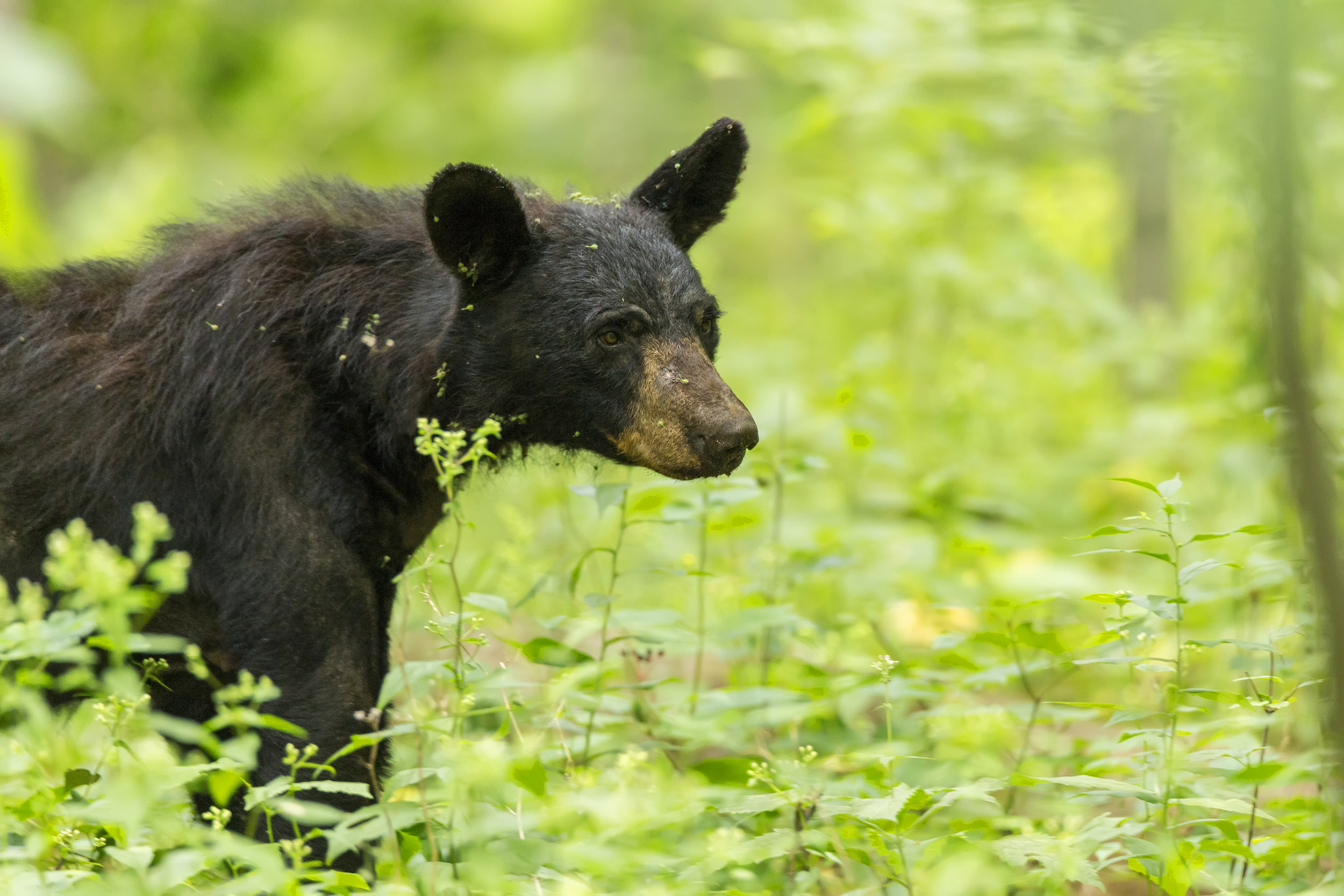
A black bear walks through the forest in Shenandoah National Park. Photo: NPS/Neal Lewis
The American black bear (Ursus americanus) is the only bear species found in Shenandoah National Park. Despite their name, black bears can vary in color from jet black to cinnamon brown or even blonde. Adult males (boars) typically weigh between 100-300 pounds, while females (sows) range from 100-175 pounds. They can live up to 30 years in protected areas like Shenandoah.
What many visitors don't realize is that black bears are incredibly intelligent creatures with excellent memories, particularly regarding food sources. They can remember productive feeding locations for years and will return seasonally to areas where they've successfully found food before. This is one reason why proper food storage is absolutely critical when visiting Shenandoah National Park—bears that associate humans with food become "problem bears" and often end up being relocated or euthanized.
During my decade of exploring Shenandoah National Park bears have consistently shown themselves to be shy and typically avoid human contact. However, their natural curiosity and incredible sense of smell (seven times more powerful than a bloodhound's) can sometimes bring them into closer proximity with hikers and campers than either would prefer.
Habitat and Behavior of Shenandoah National Park Bears
Shenandoah National Park provides ideal habitat for black bears with its mature hardwood forests, abundant water sources, and diverse food options. Bears thrive particularly in areas with oak trees, which produce acorns—a critical food source in the fall as bears prepare for winter.
Range and Territory
Male black bears in Shenandoah can occupy ranges between 10 to nearly 300 square miles, while females typically maintain smaller territories of 1 to 20 square miles. What's fascinating is that many of these ranges extend beyond park boundaries, making bear conservation a collaborative effort between the National Park Service and surrounding communities.
Bears in the park utilize different elevations and aspects throughout the seasons. After emerging from winter dens in spring, they often seek southerly facing slopes at lower elevations for early forage, then gradually move to northerly and easterly facing slopes at higher elevations as summer progresses. This adaptive behavior allows them to maximize food availability throughout the year.
Feeding Habits
While classified as carnivores, black bears are opportunistic omnivores with a primarily plant-based diet. In Shenandoah National Park, bears consume:
- Spring: Emerging grasses, skunk cabbage, insects (grubs, ants), and occasionally carrion
- Summer: Berries (blackberries, blueberries, huckleberries), fruits, and continued insect consumption
- Fall: Acorns, nuts, and fruits (this is when bears enter hyperphagia—intense feeding to gain weight for winter)
- Winter: Bears are mostly dormant, living off fat reserves
Fall feeding is particularly intense, with bears capable of gaining 1-2 pounds daily. This critical feeding period is when bear activity peaks in the park and when most human-bear encounters occur. During my September hikes along Skyline Drive, I've frequently spotted bears foraging in berry patches near trails, completely focused on calorie intake.
Denning and Reproduction
Black bears in Shenandoah National Park enter winter dens between October and November, though some may remain active all winter during mild years. Dens are commonly found in hollow trees, but may also be located in rock crevices, brush piles, or ground excavations.
Female bears give birth during January or February while in the den, typically to twins, though litters of 1-4 cubs are possible. Cubs weigh only about 8 ounces at birth and are entirely dependent on their mother. They'll emerge from the den with her in April or May and stay with their mother until she's ready to mate again the following summer.
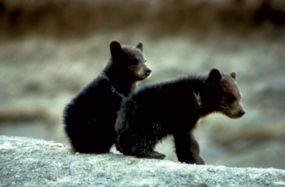
Black Bear cubs in Shenandoah National Park. Photo: NPS
Understanding this reproductive cycle is crucial for visitors. Female bears with cubs are naturally more protective and may be more likely to display defensive behavior if they perceive a threat to their young. This is why maintaining proper distance from Shenandoah National Park bears is so important—especially when cubs are present.
Bear Safety Guidelines for Hikers
Whether you're day hiking or backcountry camping, following proper bear safety protocols in Shenandoah National Park is essential. These guidelines help protect both you and the bears by minimizing negative encounters and preventing bears from associating humans with food sources.
Before Your Trip
- Research current bear activity: Check with park rangers at visitor centers about recent bear sightings or activity.
- Pack proper supplies: Bring bear-resistant food containers, bear spray (optional but recommended), and a whistle.
- Plan group hikes: Groups of four or more are less likely to have negative bear encounters.
- Learn proper behavior: Understand what to do if you encounter a bear (more on this below).
While Hiking
When hiking through Shenandoah National Park, bears are most likely to be encountered during early morning or evening hours. Here's how to minimize surprise encounters:
- Make noise: Talk, sing, or periodically clap to alert bears to your presence.
- Stay alert: Watch for bear signs like scat, tracks, scratched trees, or torn-up logs.
- Keep children close: Always keep children within immediate sight and reach.
- Stay on designated trails: Bears often use game trails through dense vegetation.
- Hike during daylight: Avoid hiking during dawn, dusk, or night when bears are most active.
At Your Campsite
Proper food management is absolutely critical when camping in bear country:
- Use bear-resistant food containers: Store all food, toiletries, and scented items.
- Maintain a clean camp: Never leave food unattended, even for a moment.
- Create a "bear-muda triangle": Keep your tent, food storage, and cooking area at least 100 yards apart.
- Properly dispose of trash: Pack out all garbage and food scraps.
- Change clothes before sleeping: Don't sleep in clothes you cooked in.
During my backcountry camping trips in Shenandoah National Park, I've made it a practice to store my bear canister at least 200 feet downwind from my tent. I've found that placing it in a small depression or against a log prevents bears from easily rolling it away should they discover it. This simple technique has kept my food (and the bears) safe through dozens of overnight adventures.
Important Note on Bear Bells
Contrary to popular belief, research suggests that bear bells may not be effective deterrents. Bears may not recognize the sound as human, and the constant jingling can become background noise. Instead, periodic human voices or hand clapping provide more distinct sounds that bears recognize as human presence. I've tested both methods extensively, and vocalization has consistently proven more effective in alerting bears to my presence on the trail.
When exploring Shenandoah National Park, bears safety should always be at the forefront of your preparation. By following these guidelines, you significantly reduce the likelihood of negative encounters while helping preserve the natural behavior of these magnificent animals.
Seasonal Bear Activity in Shenandoah
Understanding the seasonal patterns of Shenandoah National Park bears can help visitors anticipate and prepare for potential encounters. Each season brings different behaviors and activity levels as bears adapt to changing food availability.
Spring (March-May)
As bears emerge from winter dormancy, they're hungry and actively searching for food. This is when they're most likely to be spotted at lower elevations.
- Activity level: Moderate to high, increasing as spring progresses
- Feeding behavior: Grazing on emerging vegetation, digging for roots and insects
- Special considerations: Female bears with new cubs are protective and should be given extra space
During my April hikes along the Rose River Loop, I've frequently spotted bears foraging in sunny meadows for early spring greenery. They're typically focused on feeding but remain aware of human presence.
Summer (June-August)
Summer brings abundant food sources throughout the park, dispersing bears across various habitats.
- Activity level: High, with increased daytime movement
- Feeding behavior: Berries become a primary food source, particularly along ridges and open areas
- Special considerations: Bears may be encountered more frequently near popular berry patches and along stream corridors
The berry-rich areas along the Appalachian Trail sections near Skyland become bear hotspots in July and August. I've learned to make extra noise when approaching blind curves in these areas to avoid surprising bears engrossed in berry picking.
Fall (September-November)
Fall is the critical feeding period for Shenandoah National Park bears as they prepare for winter dormancy through hyperphagia—a state of intense feeding and weight gain.
- Activity level: Very high, with bears feeding up to 20 hours per day
- Feeding behavior: Heavy focus on acorns, nuts, and fruits; bears may travel widely seeking food
- Special considerations: Bears are intensely focused on feeding and may be less aware of humans
October hikes in the oak-rich Central District near Big Meadows have provided me with the most bear sightings. During good acorn years, bears concentrate in oak stands, sometimes becoming so focused on gathering acorns that they're less aware of approaching hikers—making noise is especially important during this season.
Winter (December-February)
While not true hibernators, most bears enter a state of winter dormancy with reduced activity and metabolic rate.
- Activity level: Low, with occasional activity during warm spells
- Feeding behavior: Minimal to none; bears live off fat reserves
- Special considerations: Den sites may be near trails; female bears give birth during this period
During my winter hikes in the park, bear sightings are rare but not impossible. On an unusually warm January day, I once spotted a male bear foraging near Hawksbill Mountain—a reminder that Shenandoah National Park bears may briefly emerge during winter warm spells.
By understanding these seasonal patterns, visitors can better prepare for potential bear encounters and adjust their behavior accordingly. Remember that these patterns can shift based on annual variations in food availability, particularly mast crops like acorns, which significantly influence bear movements throughout the park.
What to Do During a Bear Encounter
Despite taking preventive measures, encounters with Shenandoah National Park bears can still occur. Knowing how to respond appropriately can mean the difference between a memorable wildlife experience and a dangerous situation.
If You Spot a Bear at a Distance
Most bear encounters in Shenandoah are peaceful observations from a distance—exactly the kind of wildlife experience most visitors hope for.
- Maintain a safe distance: National Park regulations require staying at least 150 feet (50 yards) away from bears.
- Enjoy the moment: Observe quietly and take photos using a zoom lens.
- Be aware of your surroundings: Check that you're not between a mother and her cubs.
- Plan your exit: Identify how you'll move away while giving the bear plenty of space.
If a Bear Notices You
When a bear becomes aware of your presence, your behavior can influence how the encounter unfolds:
- Identify yourself: Talk calmly so the bear recognizes you as human.
- Stay grouped: Keep children close; never let them run ahead or lag behind.
- Read bear behavior: A standing bear is usually curious, not aggressive. Jaw popping, huffing, or swaying head indicates the bear is uncomfortable.
- Create distance: Slowly back away while facing the bear, giving it plenty of space.
- Prepare deterrents: Have bear spray accessible if you carry it.
If a Bear Approaches You
While rare in Shenandoah, bears may sometimes approach humans out of curiosity or if conditioned to human food:
- Stand your ground: Do not run—this can trigger a chase response.
- Make yourself look larger: Raise your arms, hold up backpack or jacket.
- Make loud noises: Yell, clap, bang pots together.
- Group together: If with others, stand shoulder-to-shoulder to appear larger.
- Use bear spray: If the bear continues to approach within 30-40 feet, prepare to use bear spray.
If a Black Bear Makes Contact
In the extremely rare event that a black bear attacks, the National Park Service recommends fighting back vigorously. Target the bear's face and muzzle with anything available—sticks, rocks, fists, or bear spray. Do NOT play dead with black bears (unlike with grizzly bears, which are not found in Shenandoah).
During my years exploring Shenandoah National Park, bears have generally shown little interest in me when encountered. Last summer near Doyles River Falls, I rounded a corner to find a bear about 40 feet away. I followed the protocols above—stopped, spoke calmly, and slowly backed away while keeping eyes on the bear. It glanced up briefly, then continued foraging, demonstrating the typically non-confrontational nature of healthy black bears.
After any significant bear encounter in Shenandoah National Park, report it to park rangers. This helps them track bear behavior patterns and identify potentially problematic individuals that may need intervention before dangerous habits develop.
Essential Bear Safety Equipment
Properly equipping yourself for bear country can significantly enhance safety and peace of mind when exploring Shenandoah National Park. Bears are best managed through preparation and prevention. Here are the essential items I recommend based on years of experience in bear territory:
Bear Spray
While less commonly carried in Shenandoah than in grizzly country, bear spray can provide an effective deterrent in the unlikely event of an aggressive black bear encounter.
SABRE Frontiersman Bear Spray
Why I recommend it: This EPA-registered spray has an impressive 40-foot range and includes a glow-in-the-dark safety clip for nighttime accessibility. I've carried this model for over five years in various national parks.
Key features:
- Maximum strength allowed by EPA
- 40-foot range for safe distance deployment
- Glow safety clip for night visibility
- Belt holster included for quick access
Bear-Resistant Food Storage
Proper food storage is non-negotiable in bear country. Shenandoah National Park regulations require all scented items to be stored securely.
UDAP Bear Resistant Food Canister
Why I recommend it: This bear canister is specifically approved for use in Shenandoah and meets all park requirements. It's lightweight compared to other options while still providing excellent protection.
Key features:
- IGBC certified bear-resistant
- Holds approximately 4-5 days of food
- Tool-free opening mechanism
- Durable polymer construction
Ursack AllMitey Bear Bag
Why I recommend it: For ultralight backpackers, this is my go-to alternative to hard canisters. It's certified bear-resistant and also protects against smaller critters. I've used it successfully on numerous multi-day trips.
Key features:
- Weighs significantly less than hard canisters
- Protects against bears, raccoons, and rodents
- 10L capacity fits 3-5 days of food
- Flexible design makes packing easier
Bear Alert Devices
While making human noise is most effective, supplemental noise makers can help alert bears to your presence on the trail.
SABRE Frontiersman Bear Bell
Why I recommend it: While bear bells aren't a complete solution, this model includes a magnetic silencer so you can control when it makes noise. The strong attachment strap keeps it secure on your pack.
Key features:
- Magnetic silencer prevents constant jingling
- Louder than standard bear bells
- Durable hook-and-loop strap attachment
- Compact and lightweight design
Emergency Preparedness Kit
Being prepared for any wilderness emergency is essential when exploring remote areas of Shenandoah.
Adventure Medical Kits Mountain Hiker First Aid Kit
Why I recommend it: This comprehensive first aid kit is designed specifically for hikers and contains supplies for treating a variety of injuries, including potential wounds from animal encounters.
Key features:
- Comprehensive wound care supplies
- Medications for pain and allergic reactions
- Wilderness first aid guide included
- Waterproof packaging protects contents
I've personally tested all these products in Shenandoah National Park and throughout the Appalachian mountain range. While the likelihood of negative bear encounters is low when proper precautions are taken, these tools provide valuable peace of mind and enhance safety for all park visitors. Remember that the best safety equipment is knowledge—understanding bear behavior and practicing proper food storage will do more to keep you safe than any gear alone.
My Experience with Bears in Shenandoah
After over a decade of regular visits to Shenandoah National Park, bears have become familiar neighbors during my wilderness adventures. I'd like to share some personal encounters that have shaped my understanding and respect for these magnificent animals.
Spring Encounter: Mother and Cubs
One crisp April morning, while hiking the Whiteoak Canyon Trail shortly after dawn, I experienced what many consider the most concerning bear encounter scenario—crossing paths with a mother and cubs. Rounding a bend about two miles in, I spotted a sow with two small cubs approximately 75 yards ahead. Following proper protocol, I immediately stopped, spoke in a calm voice, and began slowly backing away.
The mother bear stood up briefly, assessing me, then shepherded her cubs up the hillside away from the trail. I waited nearly 15 minutes before proceeding, giving them ample time to move away. This encounter reinforced the importance of maintaining distance and respecting a mother bear's space, but also demonstrated that when given room, bears typically choose avoidance over confrontation.
Summer Lesson: The Importance of Food Storage
During a July backpacking trip to Laurel Prong, I witnessed firsthand the consequences of improper food storage. Arriving at a designated camping area, I found another group packing up hurriedly—their food bag had been torn from a tree overnight by a bear despite their attempt at hanging it.
While setting up my camp 200 yards away, I used my bear canister placed downwind from my tent. Around 2 a.m., I was awakened by shuffling sounds. Cautiously peering from my tent with a headlamp, I spotted a large bear investigating my canister about 40 yards away. It spent nearly 10 minutes trying to access the container, rolling it several times before eventually giving up. By morning, the canister had been moved about 15 feet but remained unopened and intact—a testament to the effectiveness of proper equipment.
Fall Observation: Feeding Frenzy
An October hike along the Appalachian Trail near Skyland provided my most memorable bear experience. During a particularly productive acorn year, I observed seven different bears within a three-mile stretch—all intensely focused on foraging. One particularly large male was so engrossed in gathering acorns that he allowed me to watch from about 75 yards distance for nearly 30 minutes.
His methodical approach to feeding—systematically working through the oak stand and occasionally standing to pull down branches—demonstrated the single-minded focus bears develop during hyperphagia. This observation helped me understand why fall hikers report more bear sightings; the bears' need to consume massive quantities of food makes them less concerned about human proximity.
Winter Surprise
During an unusually warm January day two years ago, I took advantage of a 60-degree forecast to hike to Mary's Rock. While most bears are typically dormant during this period, I was surprised to spot a young male bear foraging in a sunny patch about halfway up the trail.
This out-of-season sighting reminded me that black bears in Shenandoah don't truly hibernate but rather enter a state of torpor, from which they may occasionally rouse during warm spells. It also taught me to remain bear-aware year-round in the park, regardless of season.
Lessons Learned
Through dozens of bear encounters in Shenandoah National Park, I've gained several key insights:
- Respect yields safety: In every encounter where I've maintained proper distance and behaved appropriately, bears have shown no aggression.
- Predictable patterns: Understanding seasonal bear behavior has helped me anticipate when and where encounters are more likely.
- Prevention works: In over 200 nights of backcountry camping with proper food storage, I've never had a bear enter my camp.
- Rangers know best: Local knowledge from park rangers has consistently provided the most accurate information about recent bear activity.
These personal experiences have deepened my appreciation for Shenandoah National Park's bears while reinforcing the importance of responsible wilderness practices. The bears I've encountered have been magnificent animals going about their natural behaviors—not the fearsome predators often portrayed in popular culture.
User Reviews: Bear Safety Products
I've collected feedback from fellow hikers and online communities about the bear safety products recommended above. These real-world experiences provide valuable insights into how these items perform in actual backcountry situations.
SABRE Frontiersman Bear Spray
"After an uncomfortably close encounter with a black bear on the AT near Skyland, I invested in this bear spray. The holster makes it easy to access, and the practice canister helped me get comfortable with how to deploy it. Thankfully haven't had to use the real thing, but carrying it gives me peace of mind when hiking solo in Shenandoah." — Amazon reviewer MountainTrekker22
UDAP Bear Resistant Food Canister
"Used this canister for a 4-day backpacking trip in Shenandoah's wilderness. On the second night, woke up to sounds of a bear investigating it. In the morning, found the canister about 30 feet from where I'd left it with claw marks on the sides, but completely intact and sealed. Worth every penny and every ounce of weight for the peace of mind!" — Reddit user u/BackcountryHiker
Ursack AllMitey Bear Bag
"As an ultralight backpacker who frequently explores Shenandoah's backcountry, I was skeptical about switching from a hard canister to this bag. After using it for six trips now, including one where it was clearly investigated by something overnight (found it with mud and scratch marks), I'm convinced. Food remained protected, and I saved nearly two pounds of pack weight. Just make sure to tie it properly to a solid tree trunk as directed." — Quora response from Virginia backpacker
These testimonials reinforce the importance of proper bear safety equipment when exploring Shenandoah National Park. Bears are intelligent and resourceful animals, and investing in quality protection measures helps ensure both human safety and the protection of these magnificent animals.
Frequently Asked Questions
How many bears are in Shenandoah National Park?
Shenandoah National Park is home to one of the densest populations of black bears on the East Coast. Current estimates suggest there are between 500-800 black bears living within the park boundaries, with the exact number fluctuating seasonally as bears move in and out of the park. Virginia as a whole has an estimated 5,000-6,000 bears, with Shenandoah providing critical habitat for a significant portion of this population. Long-term monitoring by park biologists indicates a healthy, stable bear population throughout the park's ecosystems.
Are bears in Shenandoah National Park dangerous?
Black bears in Shenandoah National Park are typically not dangerous when given proper space and respect. These bears are naturally shy and prefer to avoid human contact. In my 10+ years of regular visits to the park, I've never witnessed aggressive behavior from a bear that wasn't provoked or protecting cubs. However, bears that become habituated to human food can become problematic and potentially dangerous. This is why proper food storage is critical—it protects both visitors and bears. Statistics show that serious injuries from black bears in the park are extremely rare, with no fatalities recorded in the park's history.
What should I do if I see a bear while hiking?
If you encounter a bear while hiking in Shenandoah, remain calm and assess the situation. If the bear is distant and hasn't noticed you, quietly enjoy the viewing opportunity while maintaining at least 150 feet (50 yards) distance. If the bear has spotted you, identify yourself by speaking in a calm, assertive voice so it recognizes you as human. Never approach the bear or run—either action could trigger a chase response. Instead, slowly back away while facing the bear, giving it plenty of space to continue its activities. If hiking with others, stay grouped together to appear larger. Most bear encounters in Shenandoah end with the bear peacefully moving away once it recognizes humans are present.
Do I need bear spray in Shenandoah National Park?
Bear spray is not required in Shenandoah National Park but can provide an additional safety measure, especially for solo hikers or those uncomfortable around wildlife. Unlike in grizzly territory like Yellowstone, where bear spray is strongly recommended, the black bears of Shenandoah are generally less aggressive. In my extensive experience in the park, I've never needed to deploy bear spray, though I often carry it during remote backcountry trips. The most important bear safety measures in Shenandoah are proper food storage, maintaining appropriate distance, and knowing how to behave during an encounter. If you do carry bear spray, ensure you know how to use it properly before hitting the trails.
When is bear activity highest in Shenandoah?
Bear activity in Shenandoah National Park peaks during fall (September-November) when bears enter hyperphagia—an intense feeding period to prepare for winter. During this time, bears may feed up to 20 hours daily, primarily focusing on acorns and other high-calorie foods. This makes them more visible to hikers as they concentrate in productive feeding areas. Spring (April-May) also sees increased activity as bears emerge from winter dens hungry and seeking early season foods. Bears are typically most active during dawn and dusk hours, though during fall they may be active throughout daylight hours. For visitors wanting to spot bears safely, early morning hikes in fall along trails with abundant oak trees often provide the best opportunities.
Conclusion
Exploring Shenandoah National Park means sharing the landscape with one of America's most iconic mammals—the black bear. These magnificent creatures are an integral part of the park's ecosystem and encountering them can be the highlight of your wilderness experience when done safely and respectfully.
Throughout this guide, we've explored the fascinating biology and behavior of Shenandoah National Park bears, from their seasonal patterns to their feeding habits. We've discussed essential safety protocols for hiking and camping in bear country, examined what to do during various types of bear encounters, and reviewed the most effective safety equipment available.
My personal experiences with bears in Shenandoah have taught me that these animals aren't the fearsome predators often portrayed in popular culture, but rather intelligent, adaptable creatures that generally prefer to avoid human contact. When given proper space and respect, bears and humans can safely coexist in this remarkable wilderness.
As stewards of our national parks, we have a responsibility to protect these animals by practicing proper food storage, maintaining appropriate distances, and educating ourselves about bear behavior. These practices not only keep us safe but also protect the bears from developing dangerous habits that could lead to their removal or destruction.
Whether you're planning your first visit to Shenandoah National Park or you're a seasoned veteran of its trails, I hope this guide enhances your understanding of the park's black bear population and helps you prepare for safe, meaningful wildlife encounters. By approaching these magnificent animals with knowledge, respect, and proper preparation, you can enjoy one of nature's most awe-inspiring experiences—sharing the wilderness with bears.
For more information on Shenandoah National Park bears and other wildlife, visit the National Park Service website or speak with rangers at visitor centers throughout the park. Happy trails, and safe bear watching!
Looking for more travel inspiration? Check out these related articles: