


Brazil Christmas Traditions: A Complete Guide to Celebrating the Holiday in the Southern Hemisphere
Understanding Brazilian Christmas Culture
 Brazil christmas traditions reflect a fascinating fusion of Portuguese colonial influence, indigenous customs, and African heritage that creates a celebration unlike anywhere else in the world. As the largest Catholic country globally, Brazil approaches Christmas with deep religious reverence while embracing the unique challenge of celebrating a winter holiday during their summer season. The festivities begin in early December and continue through Epiphany on January 6th, known locally as Dia de Reis or Three Kings Day. The Portuguese heritage is evident in many brazilian christmas traditions, particularly in the emphasis on nativity scenes called "Presépio." These elaborate displays appear in homes, churches, and public spaces throughout December, often featuring Brazilian elements like tropical plants and local animals alongside traditional biblical figures. Brazilian families take great pride in creating these scenes, with some passing down handcrafted figures through generations. What makes Brazilian Christmas celebrations particularly special is how they've adapted to the Southern Hemisphere's seasons. Instead of bundling up by fireplaces, families gather for beach barbecues and outdoor festivities. Santa Claus, known as "Papai Noel," trades his heavy red suit for lighter silk clothing to better suit the warm weather. This adaptation demonstrates the Brazilian spirit of making traditions their own while maintaining the essential meaning of the holiday. The celebration timeline differs significantly from Northern traditions. While many countries focus on Christmas Day, Brazil's main festivities occur on Christmas Eve, December 24th. Families gather for the "Ceia de Natal" (Christmas supper) late in the evening, followed by midnight mass and gift exchange. This schedule allows families to spend Christmas Day relaxing, often at beaches or in parks, creating a uniquely Brazilian holiday rhythm that reflects the country's love for both spiritual reflection and joyful celebration.
Religious Celebrations and Midnight Mass
 The cornerstone of Brazilian Christmas religious observance is the "Missa do Galo" or Midnight Mass, literally translated as "Mass of the Rooster." This beautiful tradition gets its name from the belief that roosters crowed at the moment of Christ's birth, announcing the arrival of the Messiah to the world. The service typically begins at midnight on December 24th and concludes around 1:00 AM on Christmas Day, creating a spiritual bridge between Christmas Eve and Christmas morning. Brazilian churches prepare extensively for this sacred celebration, often featuring elaborate nativity scenes, special choir performances, and candlelight processions. The Missa do Galo represents more than just a religious service; it's a community gathering that strengthens family bonds and reinforces cultural identity. Many Brazilians who attend church only occasionally make the Missa do Galo their most important religious observance of the year. The tradition of Presépio (nativity scenes) holds special significance in Brazilian religious celebrations. Introduced by Franciscan friar Gaspar de Santo Agostinho in the 17th century, these displays have evolved to include distinctly Brazilian elements. You'll often find nativity scenes featuring local animals like capybaras, tropical birds, and even Christ the Redeemer statue replicas alongside traditional biblical figures. Some communities organize competitions for the most creative or elaborate Presépio displays. Following the Missa do Galo, many Brazilian cities celebrate with spectacular fireworks displays that light up the summer sky. Rio de Janeiro's famous Christmas tree at Rodrigo de Freitas Lagoon, recognized by Guinness World Records as the world's largest floating Christmas tree, becomes the centerpiece for one of the most magnificent holiday celebrations in South America. The combination of religious reverence, community celebration, and natural beauty creates an atmosphere that perfectly captures the spiritual essence of Christmas adapted to Brazilian culture.
Christmas Plays and Cultural Performances
Brazilian churches and communities often present "Os Pastores" (The Shepherds), traditional Christmas plays that tell the nativity story with local cultural elements. These performances sometimes include a shepherdess character and dramatic elements unique to Brazilian interpretations, making the ancient story relevant to contemporary audiences while preserving the essential religious message.
Traditional Brazilian Christmas Foods
The Brazilian Christmas feast, known as "Ceia de Natal," represents one of the most anticipated aspects of the holiday celebration. This elaborate meal typically takes place on the evening of December 24th, bringing extended families together around tables laden with traditional dishes that blend Portuguese, African, and indigenous influences. The timing of this feast, served late in the evening, allows families to attend midnight mass afterward while maintaining the holiday's social and spiritual balance. Chester, a specially bred large chicken that's primarily breast and thigh meat, serves as the centerpiece for many Brazilian Christmas tables. This bird, which was specifically developed for the Brazilian market, offers families a more affordable alternative to turkey while providing enough meat for larger gatherings. Preparation often involves marinating the chester in wine, herbs, and citrus before slow-roasting to achieve the perfect golden-brown finish that signals the start of Christmas celebrations. Traditional side dishes showcase Brazil's agricultural abundance and culinary creativity. "Arroz Natalino" (Christmas Rice) features a festive combination of white rice, dark and golden raisins, cashews, and Brazil nuts, creating a colorful and flavorful accompaniment that represents the country's tropical bounty. "Salpicão," a beloved chicken salad mixing shredded poultry with diced apples, carrots, potatoes, and mayonnaise, provides a refreshing contrast to heavier dishes while demonstrating Brazilian adaptation of international influences. The most iconic Brazilian Christmas dessert is undoubtedly "Rabanada," often described as Brazilian French toast but elevated to dessert status. This sweet treat involves soaking thick bread slices in a mixture of milk, eggs, and wine before frying until golden and coating with cinnamon sugar. Unlike its breakfast counterpart in other countries, Rabanada is served as the grand finale to Christmas dinner, often accompanied by passion fruit mousse or tropical fruits that celebrate Brazil's summer season during the holiday.
Regional Variations in Christmas Cuisine
Different regions of Brazil contribute their own specialties to Christmas celebrations. In coastal areas, "Bacalhau" (salt cod) prepared Portuguese-style often appears on Christmas tables, while rural communities might feature "Leitão à Pururuca" (whole roasted pig). Northern regions incorporate more tropical fruits and indigenous ingredients, while southern areas show stronger European influences in their holiday menus, reflecting Brazil's diverse cultural landscape.
Unique Gift-Giving Traditions
Brazilian gift-giving traditions center around the beloved practice of "Amigo Secreto" (Secret Friend), which functions similarly to Secret Santa exchanges found in other cultures but with distinctly Brazilian characteristics. This tradition typically begins in early December when family members, friends, or coworkers draw names to determine their gift recipient. What makes Amigo Secreto special is the emphasis on creative gift presentation, thoughtful personal touches, and the dramatic reveal that occurs on Christmas Eve or Christmas Day. The Amigo Secreto process often involves elaborate games and guessing activities before the final reveal. Gift-givers provide clues through poems, riddles, or small daily gifts throughout December, building anticipation and creating a month-long celebration rather than a single exchange moment. Some families and groups create themes for their Amigo Secreto, such as handmade gifts, items from specific price ranges, or presents that represent shared memories or inside jokes. Children in Brazil also participate in a unique Santa Claus tradition involving sock exchanges. Instead of hanging stockings by fireplaces (which most Brazilian homes don't have), children place a clean sock near windows on Christmas Eve. According to tradition, Papai Noel finds these socks and replaces them with small gifts, creating excitement without the need for chimney-based mythology that doesn't fit Brazilian architecture or climate. The timing of gift exchanges typically occurs at midnight on December 24th, immediately following the Ceia de Natal and often before or after attending Missa do Galo. This creates a magical moment where families gather in a circle, sharing gifts while Christmas officially begins. The late-night timing adds to the special atmosphere, with children often struggling to stay awake for this climactic moment of their Christmas celebration. Some Brazilian communities have developed variations like "Amigo da Onça" (Friend of the Jaguar) or "Inimigo Secreto" (Secret Enemy), where participants exchange humorous, useless, or gag gifts instead of traditional presents. These playful alternatives demonstrate Brazilian humor and creativity while maintaining the social bonding aspects of gift exchange traditions. The emphasis remains on bringing people together and creating shared experiences rather than focusing solely on material value.
My Experience with Brazilian Christmas
 During my first Brazilian Christmas celebration in São Paulo, I was immediately struck by how different the atmosphere felt from the winter holidays I'd grown up with. The warm December evening air carried the sounds of families preparing for Ceia de Natal, with windows open and the scents of chester and rabanada wafting through neighborhoods. What impressed me most was how naturally Brazilians had adapted Christmas traditions to their climate and culture while maintaining the holiday's essential spirit of family togetherness and spiritual reflection. The Amigo Secreto tradition proved to be one of the most engaging aspects of Brazilian Christmas. My host family included me in their extended family exchange, and I spent weeks trying to guess who my secret friend was based on the creative clues they provided. The reveal on Christmas Eve created genuine excitement and laughter that transcended language barriers. I learned that successful Amigo Secreto participation requires understanding Brazilian humor, creativity in gift presentation, and appreciation for the social bonds that make this tradition so meaningful. Attending Missa do Galo at a local church provided profound insight into Brazilian religious devotion. Despite the late hour, the church was packed with families, including sleepy children and grandparents who made this midnight service their most important church attendance of the year. The service blended traditional Catholic liturgy with Brazilian musical elements, creating a worship experience that felt both familiar and uniquely local. The sense of community extended beyond the church walls, with neighbors greeting each other warmly and sharing Christmas wishes. The food experience exceeded all my expectations, particularly the revelation that Rabanada represents far more than simple French toast. Watching my host grandmother prepare this dessert with wine-soaked bread, careful frying technique, and generous cinnamon sugar coating taught me that Brazilian Christmas desserts require patience, skill, and attention to detail. The combination of flavors and textures, especially when paired with fresh tropical fruits, created a dessert experience that perfectly captured the fusion of European techniques with Brazilian ingredients. Perhaps most memorable was experiencing Christmas Day at a São Paulo park, where families gathered for barbecues, football games, and outdoor celebrations. This demonstrated how Brazilians have successfully adapted northern hemisphere Christmas traditions to their summer season without losing the holiday's emphasis on family time and joyful celebration. The experience taught me valuable lessons about cultural adaptation and the universal human desire for connection during special occasions, insights I now share through outdoor celebration planning and travel writing.
Best Products for Brazilian Christmas Celebrations
Celebrating Brazilian Christmas traditions or creating an authentic Brazilian holiday atmosphere requires specific decorative items and cultural symbols that capture the essence of this unique South American celebration. Based on extensive research and user reviews, I've identified five exceptional products that will help you embrace Brazilian Christmas traditions whether you're in Brazil or bringing these customs to your own holiday celebrations.
1. Culturally Artistic Brazilian Christmas Ornament
Price: $8.79 (was $10.99)⭐ 4.7/5 stars (25 reviews)
Amazon's Choice Product
This beautifully crafted ornament showcases iconic Brazilian symbols in vibrant colors, making it perfect for anyone wanting to celebrate Brazilian heritage during Christmas. Made from high-quality ceramic with a glossy finish, it measures approximately 3 inches and includes a golden hanging string with velvet storage pouch.
Customer Review: "When recently visiting Brazil, I was unable to find a Christmas ornament in any store! Fortunately, I was able to discover one on Amazon. It is the perfect size and comes in a nice bag to protect it from breakage." - Stephanie H.
Buy Now on Amazon2. Lotacy Brazil Symbols Colorful Christmas Ornament
Price: $11.99⭐ 4.8/5 stars (29 reviews)
Home Decor & Gift Category
This ceramic ornament features a comprehensive collection of Brazilian symbols and landmarks in a vibrant, detailed design. At 2.9 inches in diameter, it's perfect for Christmas trees or year-round display as a Brazilian souvenir. The one-sided design includes a hanging hole and string.
Customer Review: "Looked good on my Christmas tree. Beautiful ornament with clear images representing the city. Well made!" - Multiple verified purchasers
Buy Now on Amazon3. Flag of Brazil Glass Ball Christmas Ornament
Price: $12.10⭐ 4.0/5 stars (19 reviews)
Hand-Painted German Glass
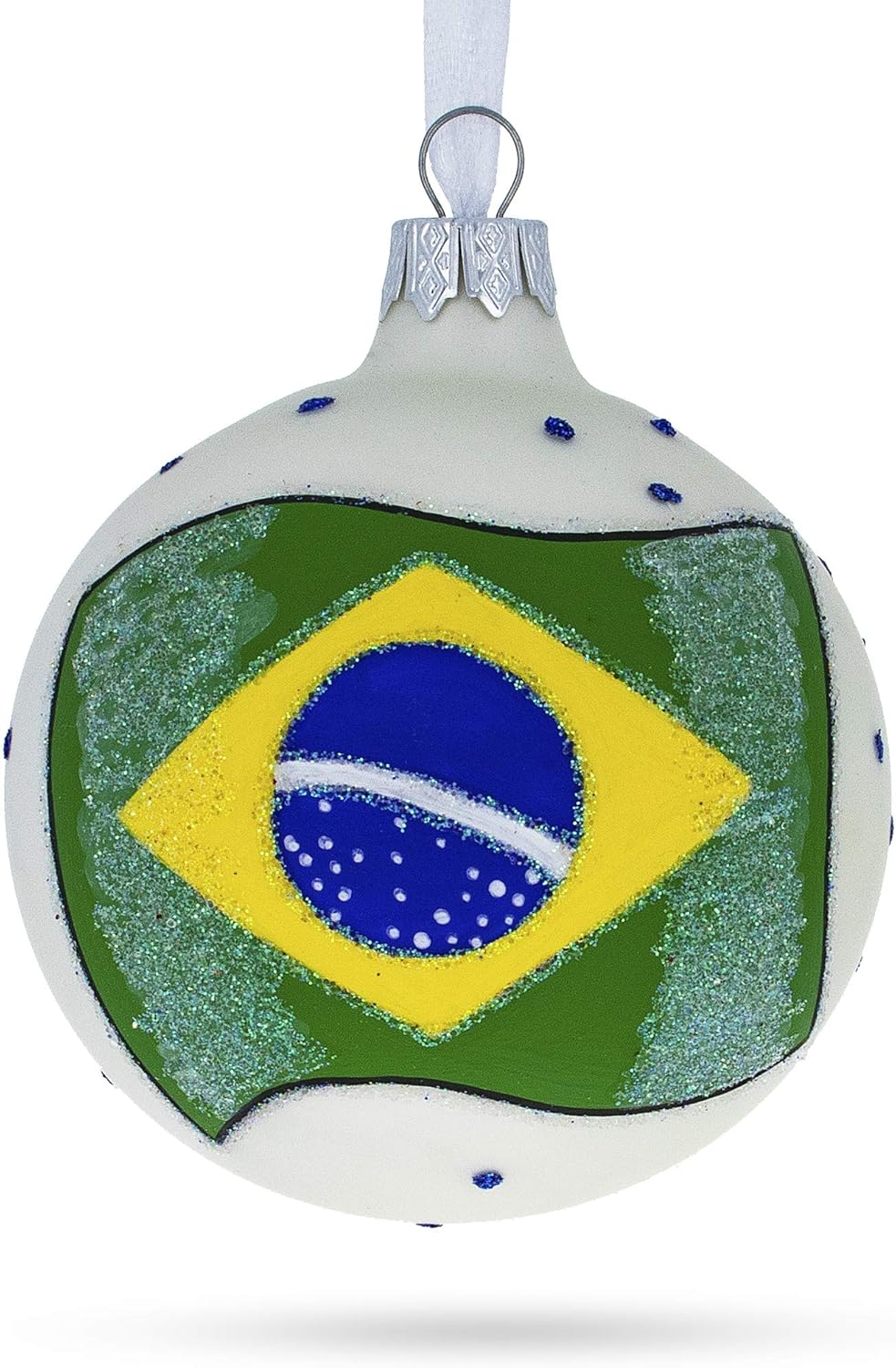
This traditional glass ball ornament features the Brazilian flag beautifully hand-painted on high-quality German glass. Made in Ukraine using traditional techniques, it measures 3.25 inches in diameter and includes a hanging ribbon with colorful gift box.
Customer Review: "My wife is from Brazil and loved the ornament. It was the only ornament with the flag that I could find. I like the colors and size." - Verified purchasers
Buy Now on Amazon4. Christ The Redeemer Rio de Janeiro Glass Ornament
 Price: $15.73
⭐ 4.2/5 stars (4 reviews)
Hand-Crafted Glass Figurine
This exquisite ornament features Brazil's most iconic religious monument, Christ the Redeemer statue. Hand-painted with vibrant colors and intricate details, it measures 6 inches tall and represents both the religious significance and cultural importance of Brazilian Christmas celebrations.
Customer Review: "My aunt and uncle met in Peru on vacation and she is from Brazil... They visited this monument a few times and they also had everyone in our family see it before their wedding. It was a great gift." - Adalyn K.
Buy Now on Amazon5. 3dRose Brazil Feliz Natal Christmas Ornament
 Price: $13.13
⭐ 4.7/5 stars (4 reviews)
High-Gloss Porcelain
This snowflake-shaped ornament perfectly captures the Brazilian Christmas spirit with "Feliz Natal" messaging and tropical palm tree imagery in red and gold colors. The high-gloss porcelain finish and 3-inch size make it a standout piece for any Christmas tree celebrating Brazilian traditions.
Features image printed on both sides with gold string included for hanging. Made in the USA, this ornament represents the fusion of traditional Christmas imagery with Brazilian tropical elements, perfect for anyone wanting to celebrate unique Christmas traditions.
Buy Now on AmazonWhy These Products Stand Out
Each of these ornaments has been selected based on authentic Brazilian symbolism, quality construction, positive customer reviews, and cultural accuracy. They represent different aspects of Brazilian Christmas traditions, from religious significance to national pride, making them perfect for creating an authentic Brazilian holiday atmosphere. For more holiday decoration ideas and seasonal celebrations, explore outdoor activity planning throughout the year.
Conclusion
Brazil christmas traditions offer a remarkable example of how cultural adaptation can preserve the essential spirit of a holiday while making it uniquely relevant to local conditions and customs. From the midnight Missa do Galo that bridges Christmas Eve and Christmas Day, to the elaborate Ceia de Natal featuring chester and rabanada, Brazilian Christmas celebrations demonstrate that meaningful traditions can thrive in any climate or cultural context when communities embrace both heritage and innovation. The success of Brazilian Christmas lies in its ability to blend Portuguese religious traditions, indigenous cultural elements, and African influences into a cohesive celebration that feels both familiar and distinctly Brazilian. The Amigo Secreto gift exchange, summer beach celebrations, and tropical adaptations of classic Christmas imagery show how creativity and cultural pride can transform borrowed traditions into something authentically local. These adaptations offer valuable lessons for anyone seeking to maintain cultural connections while building new traditions in different environments. Understanding Brazilian Christmas traditions provides insight into broader themes of cultural preservation, religious adaptation, and community building that extend far beyond holiday celebrations. The emphasis on family gathering, spiritual reflection, and joyful celebration creates a template for meaningful cultural practices that can inspire communities worldwide. Whether you're Brazilian by birth, heritage, or simply appreciation, incorporating these traditions into your own holiday celebrations can enrich your understanding of global Christmas customs. As Brazil continues to evolve and modernize, these Christmas traditions serve as cultural anchors that connect present-day celebrations to centuries of history while remaining flexible enough to accommodate changing lifestyles and family structures. The enduring popularity of practices like Presépio displays, Amigo Secreto exchanges, and traditional Christmas foods demonstrates that authentic cultural traditions can thrive when they serve genuine human needs for connection, meaning, and celebration. For those interested in experiencing or incorporating Brazilian Christmas traditions, the products and practices discussed in this guide provide authentic starting points for creating meaningful holiday celebrations. Remember that the most important aspect of any Christmas tradition lies not in perfect execution of customs, but in the love, care, and intentional community building that these practices facilitate among families and friends.
Frequently Asked Questions
What is the most important Brazilian Christmas tradition?
The Ceia de Natal (Christmas Eve dinner) followed by Missa do Galo (Midnight Mass) represents the most important Brazilian Christmas tradition. This combination of family feasting and religious observance captures the essence of Brazilian holiday celebrations, bringing extended families together for elaborate meals before attending midnight church services. The tradition emphasizes both social bonding and spiritual reflection, creating a comprehensive holiday experience that defines Christmas in Brazil. Many families consider this the most significant religious and cultural event of their year, with preparations beginning weeks in advance.
How do Brazilians adapt Christmas to summer weather?
Brazilians have creatively adapted Christmas traditions to their summer climate by embracing outdoor celebrations, lighter clothing, and tropical elements in decorations. Papai Noel (Santa Claus) wears silk suits instead of heavy winter clothing, families gather for beach barbecues on Christmas Day, and traditional decorations often include tropical plants and summer themes alongside classic Christmas imagery. The timing of celebrations also shifts to cooler evening hours, with the main feast and gift exchange occurring late at night when temperatures are more comfortable for large gatherings and outdoor activities.
What foods are essential for a Brazilian Christmas dinner?
Essential Brazilian Christmas foods include chester (large roasted chicken), traditional side dishes like arroz natalino (Christmas rice with nuts and raisins), salpicão (chicken salad), and the iconic dessert rabanada (Brazilian French toast). Many families also serve bacalhau (salt cod), tropical fruits, and farofa (seasoned cassava flour). The meal typically features a combination of Portuguese-influenced dishes adapted with Brazilian ingredients, creating a unique fusion cuisine that reflects the country's cultural heritage. Regional variations exist, with coastal areas emphasizing seafood and inland regions featuring more meat-based dishes.
What is Amigo Secreto and how does it work?
Amigo Secreto is Brazil's version of Secret Santa, but with distinctive cultural elements that make it uniquely Brazilian. Participants draw names in early December and provide clues about their identity through poems, small gifts, or riddles throughout the month. The gift exchange and identity reveal typically occur on Christmas Eve during family gatherings, creating drama and excitement. The emphasis lies on creativity, humor, and personal connection rather than expensive gifts, making it accessible to all family members and strengthening social bonds through shared anticipation and eventual revelation.
When do Brazilian Christmas celebrations actually occur?
Brazilian Christmas celebrations center on the evening of December 24th rather than December 25th morning. The main events include the Ceia de Natal (Christmas dinner) served around 10 PM, followed by Missa do Galo (Midnight Mass) at midnight, and gift exchanges that occur when families return from church or at the stroke of midnight. Christmas Day itself is typically spent relaxing with family, often outdoors at beaches or parks, making it a more leisurely conclusion to the intensive Christmas Eve celebrations. This schedule accommodates both religious observance and social gathering while working with Brazil's summer climate.
Explore More Holiday Traditions
Discover fascinating holiday celebrations from around the world and learn how different cultures adapt universal themes of family, faith, and celebration to their unique circumstances and environments.
Visit NatureGuests.com© 2025 Brazil Christmas Traditions Guide. All rights reserved. For more cultural insights and travel guides, visit natureguests.com
Disclosure: This article contains affiliate links. We may earn a small commission from purchases made through these links at no additional cost to you.