

Planning a trip to Biscayne National Park from Miami opens the door to an extraordinary underwater paradise just a short distance from the city's hustle and bustle. This comprehensive guide breaks down all your transportation options, what gear to bring, and insider tips based on personal experience. Whether you're driving, taking public transportation, or joining a boat tour, I'll walk you through everything you need to know for a seamless journey to this stunning marine sanctuary. As someone who's navigated this route multiple times, I'm excited to share the most efficient ways to reach Biscayne National Park and make the most of your visit to this unique ecosystem.
Overview of Biscayne National Park
Biscayne National Park is a stunning marine sanctuary located just south of Miami, Florida. What makes this national park unique is that 95% of its area is underwater, protecting the northern section of the Florida Reef, one of the world's largest coral reefs. The park covers 172,971 acres and includes a variety of ecosystems from mangrove forests along the shoreline to the offshore barrier reefs.
The park encompasses the northernmost Florida Keys, with Elliott Key being the largest island within the park boundaries. Unlike many national parks, Biscayne has very limited land area accessible by road—just one mile of road within the entire park! This means that to truly experience Biscayne National Park, visitors need to plan accordingly for water activities and boat transportation.

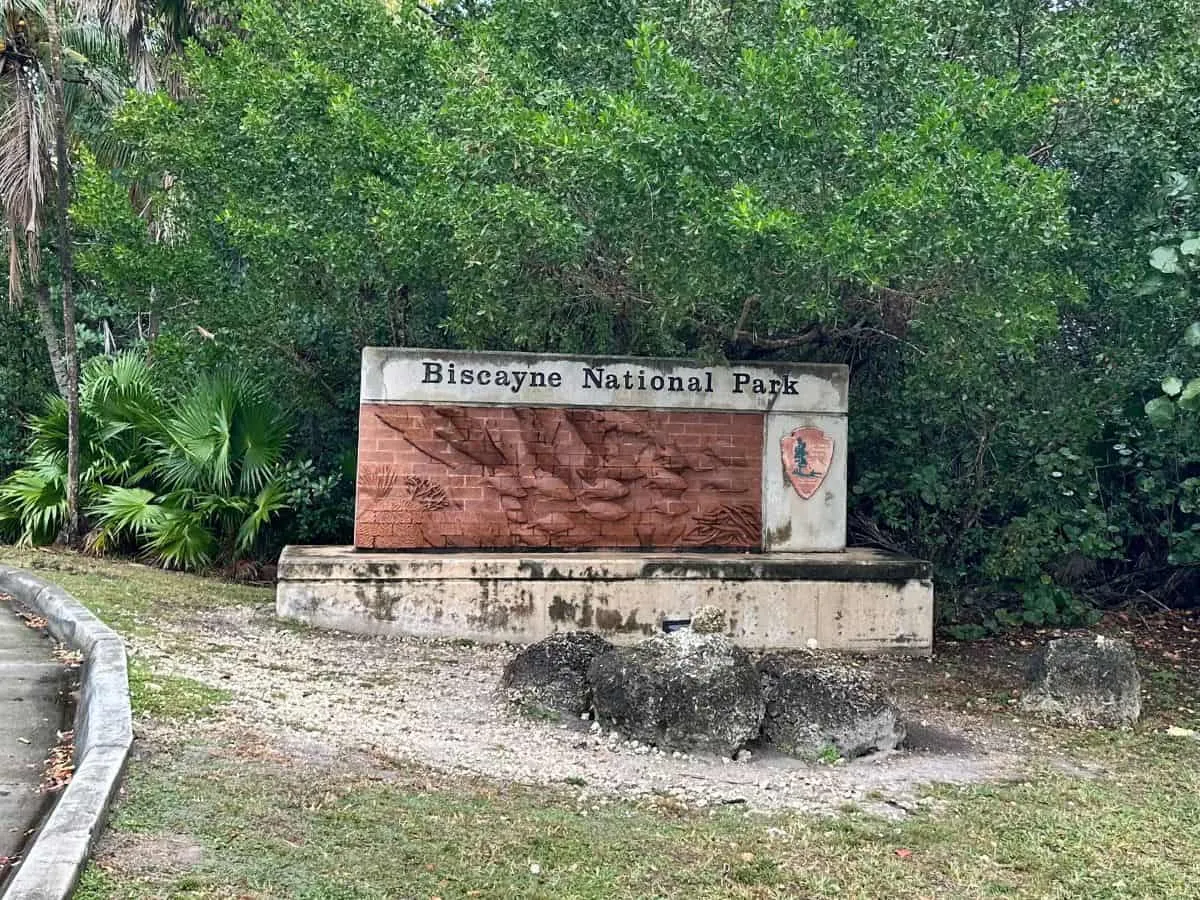
The entrance sign to Biscayne National Park
Quick Facts About Biscayne National Park
- Location: Just 25 miles east of Miami
- Size: 172,971 acres (95% underwater)
- Established: As a national monument in 1968, became a national park in 1980
- Main Visitor Center: Dante Fascell Visitor Center in Homestead, FL
- Entrance Fee: Free (though boat tours and activities have associated costs)
- Main Activities: Boating, snorkeling, fishing, paddling, wildlife viewing
Getting to Biscayne National Park by Car
Driving from Miami to Biscayne National Park is the most straightforward and flexible option for most visitors. The Dante Fascell Visitor Center, which serves as the main entrance to the park, is approximately 35-45 miles from downtown Miami, depending on your starting point. The drive typically takes about 1 hour, though Miami traffic can be unpredictable and sometimes extend this to 90 minutes or more.
Traffic Warning
Miami traffic can be notoriously unpredictable. What should be a one-hour drive can sometimes take up to 3 hours during peak traffic times. Always allow extra time, especially if you have a scheduled boat tour.
Driving Directions from Miami to Biscayne National Park
From the North (Miami and surrounding areas):
- Take the Florida Turnpike south to Exit 6 (Speedway Boulevard)
- Turn left from the exit ramp onto Speedway Boulevard
- Continue south to SW 328th Street (North Canal Drive)
- Turn left onto SW 328th Street and continue for approximately 4 miles until you reach the end of the road
- The park entrance will be on your left, just before the entrance to Homestead Bayfront Marina
Alternative Route via US Highway 1:
- Drive south on US Highway 1 to Homestead
- Turn left onto SW 137th Avenue (Speedway Boulevard)
- Continue south for about 5 miles to SW 328th Street (North Canal Drive)
- Turn left and continue for approximately 4 miles to the end of the road
- The park entrance will be on your left, just before the entrance to Homestead Bayfront Marina
Address for GPS Navigation:
Dante Fascell Visitor Center
9700 SW 328th Street
Sir Lancelot Jones Way
Homestead, FL 33033
Tip: Set your GPS to "Dante Fascell Visitor Center" or "Biscayne National Park Visitor Center" rather than just "Biscayne National Park" to ensure accurate directions.
Parking Information
Free parking is available at the Dante Fascell Visitor Center. The parking lot has spaces for standard vehicles as well as a few spots for RVs and trailers. During peak season (winter months, especially weekends and holidays), the parking lot can fill up, so it's advisable to arrive early. The park gates close at 5:00 PM, and overnight parking is not permitted.
Travel Time From Popular Starting Points
- Downtown Miami to Biscayne National Park: 45-60 minutes (without traffic)
- Miami Beach to Biscayne National Park: 60-75 minutes
- Miami International Airport to Biscayne National Park: 45-60 minutes
- Fort Lauderdale to Biscayne National Park: 90 minutes
- Key Largo to Biscayne National Park: 60 minutes
Public Transportation Options
While driving is the most convenient way to reach Biscayne National Park, public transportation options are available, though they require some planning and transfers. Here's how to get to Biscayne National Park from Miami using public transit:
Miami-Dade Transit Option (Train + Bus)
- Take the Metrorail (Line 2600) from Government Center Station or Miami Airport Station to Dadeland South Station
- Transfer to Metrobus Route 287 at Dadeland South Metrorail Station
- Take the bus to SW 85 Ave @ SW 209 St
- From there, you'll need to either walk (approximately 20 minutes) or take a rideshare to the park entrance
The total journey time is approximately 1 hour and 51 minutes, not including the final connection to the park entrance. The fare is around $4-5 for the complete journey.
Important Note
Public transportation does not take you directly to the park entrance. The final leg requires either a substantial walk or arranging a rideshare/taxi, which can be challenging to find for the return journey due to limited cell service at the park.
Homestead Trolley (Seasonal)
During the winter season (late November through April), the Homestead National Parks Trolley provides free transportation to Biscayne National Park on weekends and holidays.
Pickup Location: Downtown Homestead
Schedule: Weekends only, typically 9 AM to 5 PM
Cost: FREE
Note: The Courtyard by Marriott in Homestead has a trolley stop directly in front of it, making this hotel a convenient option if you plan to use the trolley.
Ride-Share Services
While ride-share services like Uber and Lyft can take you to the park, there are significant limitations to be aware of:
- Cell signal at the Dante Fascell Visitor Center is very limited, making it difficult to order a ride-share for your return journey
- The park closes at 5:00 PM, and if your ride-share arrives after closing, they may not be able to enter
- Ride-share availability in the Homestead area is generally less reliable than in central Miami
- One-way fare from downtown Miami to Biscayne National Park can range from $40-70 depending on time of day and demand
Not Recommended
Due to the remote location and poor cell service at the park, relying solely on ride-share services for transportation to and from Biscayne National Park is not recommended. If you do use ride-share to reach the park, make arrangements for your return journey in advance or plan to join a scheduled tour that includes transportation.
Boat Tours and Water Access
Since Biscayne National Park is 95% water, the most authentic way to experience the park is by boat. While you can visit the Dante Fascell Visitor Center by land, accessing the islands, reefs, and most of the park's attractions requires water transportation. There are no bridges or ferries connecting the park's islands to the mainland, making boat tours an essential part of your visit.
Guided Boat Tours
The Biscayne National Park Institute offers a variety of guided boat tours that depart from either the Dante Fascell Visitor Center in Homestead or from Coconut Grove in Miami. These tours are the easiest way to experience the park if you don't have your own boat.
Popular Tour Options:
- Heritage of Biscayne Cruise ($83, 3.5 hours) – A boat tour with historical narration and a 1-hour stop at either Boca Chita Key, Elliott Key, or Adams Key
- Snorkeling Experience ($115, 3.5 hours) – Guided snorkeling at coral reefs, shipwrecks, or mangrove areas depending on conditions
- Stiltsville Guided Tour ($70, 2 hours) – Departing from Coconut Grove, this tour explores the historic stilt houses in the northern part of the park
Tours operate seasonally with varying schedules. Advance reservations are highly recommended, especially during winter (peak) season. For the most current offerings and to book tours, visit the Biscayne National Park Institute website.
Tour Departure Locations
Be sure to verify your tour's departure location when booking, as Biscayne National Park tours depart from two different locations:
- Dante Fascell Visitor Center (Homestead) - Most general park tours depart from here
- Dinner Key Marina (Coconut Grove) - Some tours, particularly the Stiltsville tours, depart from this location in Miami, about 1 hour north of the main visitor center
Private Boat Charters
Several companies offer private charters to Biscayne National Park for those seeking a more personalized experience:
- Cool Cruising (305-714-2121)
- Fiesta Cruises (305-371-3033)
- Island Queen Cruises (305-379-5119)
- Midnight Sun Charters (340-998-7682)
- Nice Aquatic (305-709-1185)
- Ocean Force Adventures (305-372-3388)
Kayaking and Paddleboarding
For the more adventurous, kayaking or paddleboarding offers a unique way to explore the park's mangrove shorelines and shallow waters.
- Rental Option: The park does not offer kayak rentals directly, but you can join guided paddling tours
- Guided Paddling: The Biscayne National Park Institute offers a 90-minute guided kayak tour through the mangroves for $39 per person
- Personal Equipment: If you have your own kayak or paddleboard, you can launch it at the Dante Fascell Visitor Center for free
If You Have Your Own Boat
Visitors with their own vessels can access the park via several locations:
- Convoy Point: Adjacent to the Dante Fascell Visitor Center, this has a public boat ramp
- Homestead Bayfront Marina: Located next to the park entrance, offers a boat ramp for a fee
- Black Point Marina: North of the park, provides access to the northern section of Biscayne National Park
- Crandon Marina: On Key Biscayne, offers access to the northern section of the park
Be sure to check current boating regulations and safety information before heading out.
Essential Gear for Your Visit
Since Biscayne National Park is primarily a water-based park, your gear should focus on water activities, sun protection, and staying comfortable in a subtropical environment. Here are the essentials to bring for your visit:
Water Protection Gear
Waterproof Dry Bags
Earth Pak Original Waterproof Dry Bag
Keep your belongings dry during boat tours and water activities
Check price on Amazon (*)Waterproof Phone Case
Body Glove Tidal Waterproof Phone Pouch
Essential for protecting your phone while allowing underwater photography
Check price on Amazon (*)Sun Protection
Reef Safe Sunscreen
Thrive Natural Care Reef Safe Sunscreen SPF50
Protect the coral reefs while protecting your skin from the intense Florida sun
Check price on Amazon (*)Remember to reapply sunscreen regularly when visiting Biscayne National Park, especially after swimming or sweating.
Water Activities Gear
Quality Snorkeling Set
Seaview 180 V3 Full Face Snorkel Mask
A comfortable full-face design for underwater exploration of Biscayne's reefs
Check price on Amazon (*)Quick-Dry Towel
Nomadix Ultralight National Parks Towel
Compact, fast-drying, and perfect for boat trips and beach stops
Check price on Amazon (*)Additional Essential Items
- Water Shoes: Protect your feet from sharp rocks and coral
- Hat with Wide Brim: Essential for sun protection
- Polarized Sunglasses: Reduces glare from water
- Reusable Water Bottle: Stay hydrated in the Florida heat
- Insect Repellent: For protection against mosquitoes, especially near mangroves
- First Aid Kit: Basic supplies for minor injuries
- Light, Quick-Dry Clothing: Comfortable in humid conditions
- Binoculars: For wildlife viewing
Weather Preparedness
Florida weather can change quickly. Even during the dry season, sudden showers are possible. Consider bringing a lightweight, packable rain jacket. During winter months, heated vests can be useful for early morning boat rides when temperatures can be cooler than expected.
Always check the weather forecast before your visit, and be prepared to adjust your plans accordingly. Thunderstorms in Florida can develop rapidly, especially during summer afternoons.
Best Time to Visit Biscayne National Park
Timing your visit to Biscayne National Park can significantly impact your experience. The park is open year-round, but seasonal factors like weather, crowds, and water conditions vary considerably throughout the year.
Seasonal Breakdown
Winter (December - February)
- Weather: Pleasant with temperatures between 60-80°F (16-27°C)
- Water Visibility: Generally excellent
- Crowds: Peak visitor season, especially around holidays
- Pros: Lower humidity, fewer mosquitoes, mild temperatures
- Cons: Strong winds can sometimes disrupt boat tours, especially in January
- Special Note: Homestead Trolley service operates during this season
Spring (March - May)
- Weather: Warming up, 70-90°F (21-32°C)
- Water Visibility: Very good, often excellent
- Crowds: Busy during Spring Break, otherwise moderate
- Pros: Good balance of pleasant weather and fewer crowds (except Spring Break)
- Cons: Increasing chance of afternoon thunderstorms by May
Summer (June - August)
- Weather: Hot and humid, 80-90°F (27-32°C), feels hotter with humidity
- Water Visibility: Variable, can be affected by algae blooms
- Crowds: Busy with summer vacationers
- Pros: Longer daylight hours
- Cons: Hurricane season, frequent afternoon thunderstorms, intense heat and humidity, mosquitoes can be overwhelming
Fall (September - November)
- Weather: Gradually cooling, 70-80°F (21-27°C)
- Water Visibility: Improving as season progresses
- Crowds: Lowest visitation of the year
- Pros: Fewer crowds, pleasant temperatures by late October
- Cons: Peak of hurricane season (September-October), some tour options may be limited
My Recommendation
Based on my multiple visits to Biscayne National Park, I believe December offers the best overall experience:
- Comfortable temperatures without extreme heat
- Lower humidity and fewer mosquitoes
- Good water visibility for snorkeling
- Seasonal trolley service is operating
- Holiday crowds haven't reached their peak
- Hurricane season has ended
Runner-up: April, after Spring Break crowds have subsided but before the summer heat and storm season begins.
Times to Avoid
I recommend avoiding visits during these times if possible:
- September: Peak of hurricane season with highest chance of disruptions
- Holiday weeks: Christmas, Spring Break, and Easter see extremely high visitor numbers
- Summer weekends: Combination of heat, thunderstorms, and crowds create less pleasant conditions
My Experience Visiting Biscayne National Park
My first visit to Biscayne National Park was during a December Florida road trip that included all three of Florida's national parks. I chose to base myself in Homestead at the Home2 Suites, which gave me convenient access to both Biscayne and Everglades National Parks.
The morning of my visit, I left my hotel around 8:30 AM for what should have been a 15-minute drive to the park. The route was straightforward, following SW 328th Street all the way to the end. The final few miles of the drive took me through agricultural lands before reaching the park entrance. There was no entrance fee, and plenty of parking was available when I arrived.
Boat Tour Experience
I had pre-booked the Heritage of Biscayne Cruise for 10:00 AM, which I highly recommend doing in advance, especially during peak season. Unfortunately, I learned upon arrival that my tour had been canceled due to high winds – something I hadn't anticipated in December. The park ranger explained that winter months can occasionally have strong winds that make boating conditions unsafe or uncomfortable.
This taught me an important lesson: always have a backup plan when visiting Biscayne. The park's accessibility is heavily dependent on weather conditions, and tour cancellations can happen with little notice. I recommend calling ahead the day before your visit if you've booked a tour, especially during windy conditions.
Land-Based Activities
With my boat tour canceled, I explored what Biscayne offers on land. The Dante Fascell Visitor Center has excellent exhibits about the park's ecosystems, with detailed models of marine life and interactive displays. The second floor offers air conditioning – a welcome break from the Florida heat – and panoramic views of Biscayne Bay.
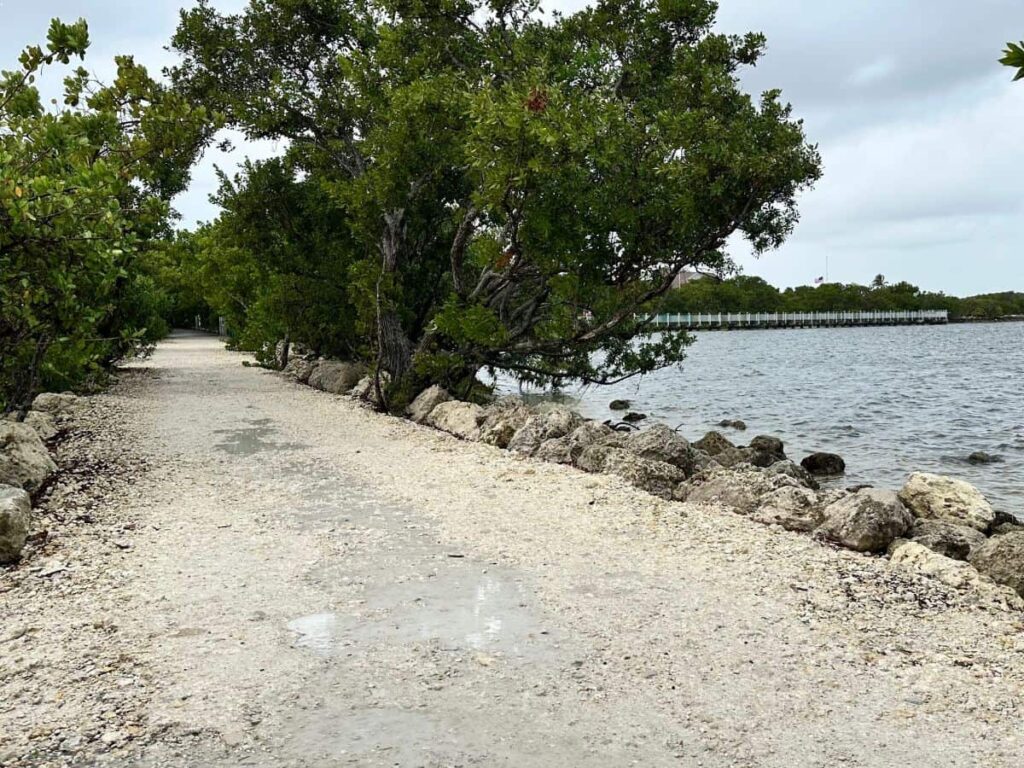
I then walked the Jetty Trail, an easy 0.8-mile path that follows the shoreline and a jetty extending into the bay. Despite being unable to get out on the water, I was surprised by how much wildlife I could see from shore. I spotted various wading birds, schools of fish in the clear waters, and even a small ray gliding along the bottom near the jetty.
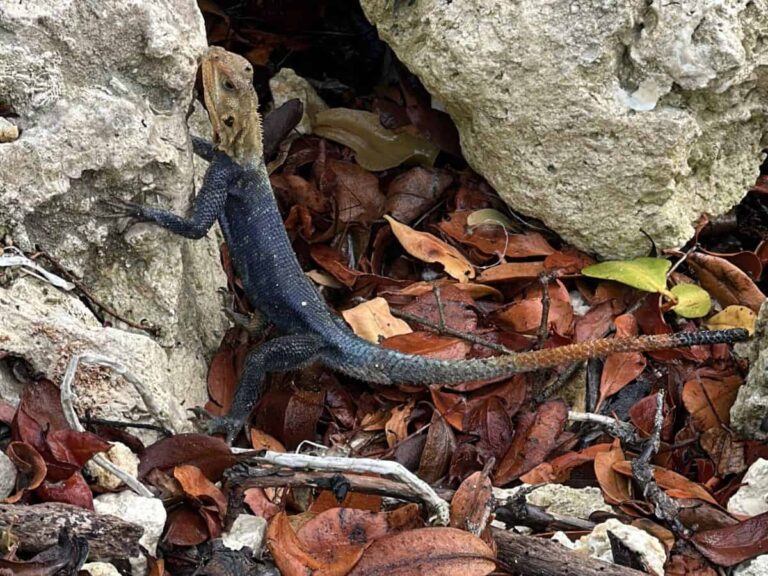
A colorful Agama lizard I spotted along the Jetty Trail
Visitor Review: Sarah from Tampa
"We took the snorkeling tour in April and it was absolutely worth it! Water visibility was excellent, and we saw so many colorful fish and even a small reef shark. The guides were knowledgeable about marine life and safety. Tip: Bring your own snorkel gear if you have it, as rentals are limited."
Visitor Review: Mike from Chicago
"The Heritage cruise was fantastic but watch out for cell service! We couldn't get an Uber back to our hotel because there's no signal at the visitor center. Had to ask the staff to call us a taxi which took over an hour to arrive. Definitely plan your transportation in advance."
Visitor Review: Jennifer from Orlando
"We visited in August and the mosquitoes were INTENSE. Bring the strongest bug spray you can find and wear long sleeves if possible. That said, we had the park almost to ourselves and saw manatees near the visitor center dock. Just be prepared for the heat and bugs if you visit in summer."
Lessons Learned
My Top Tips Based on Personal Experience:
- Book boat tours in advance but have a backup plan in case of cancellation
- Visit during weekdays if possible, especially in winter, to avoid crowds
- Arrive early (before 10 AM) to secure parking and maximize your day
- Bring your own food and water as there are limited food options at the park
- Don't rely on cell service for navigation, communication, or ride-sharing
- Consider combining your visit with Everglades National Park, which is only 30 minutes away
- Take the free trolley during winter months if you don't want to drive
- Check wind forecasts before your visit, especially if you've booked water activities
- Allow extra time for Miami traffic, which can be unpredictable at any time of day
A video tour of Biscayne National Park showcasing what you can expect during your visit
Frequently Asked Questions
Can you drive to Biscayne National Park?
Yes, you can drive to the Dante Fascell Visitor Center at Biscayne National Park, which is located in Homestead, Florida. However, it's important to understand that this is only the entrance to the park. Since 95% of the park is water, you can only access the islands, reefs, and most of the park's attractions by boat. There are no bridges or roads connecting the park's islands to the mainland.
Is there a ferry to Biscayne National Park?
There is no regular ferry service to Biscayne National Park's islands. To reach the islands, you'll need to either take a guided boat tour from the Biscayne National Park Institute, use your own boat, or join a chartered boat tour. The boat tours operate on varying schedules, with more options available during the winter season. It's recommended to book tours in advance through the official Biscayne National Park Institute.
How long does it take to get from Miami to Biscayne National Park?
The drive from downtown Miami to Biscayne National Park typically takes 45-60 minutes without traffic, covering a distance of about 35 miles. However, Miami traffic can be unpredictable, so it's wise to allow 1.5-2 hours during peak travel times. If you're coming from Miami Beach or northern Miami neighborhoods, expect a longer journey of up to 75 minutes without traffic. Public transportation options take considerably longer, with the bus and train combination requiring around 2 hours plus additional time for the final connection to the park.
What is the best way to experience Biscayne National Park?
The best way to experience Biscayne National Park is by water, since 95% of the park is underwater. For most visitors, taking a guided boat tour from the Biscayne National Park Institute offers the most comprehensive experience. The Heritage of Biscayne Cruise ($83, 3.5 hours) provides a good overview with a stop at one of the keys, while the Snorkeling Experience ($115, 3.5 hours) allows you to explore the underwater ecosystems. If you have your own boat, you can access the park independently. For a more active experience, guided kayak tours through the mangroves offer a unique perspective of the park's coastal habitats.
Is Biscayne National Park worth visiting?
Biscayne National Park is definitely worth visiting if you're interested in marine ecosystems, snorkeling, boating, or Florida's unique natural history. However, your experience will be limited if you don't get out on the water. The visitor center and Jetty Trail offer interesting but brief land-based activities that typically occupy 1-2 hours. To truly appreciate the park, plan to join a boat tour or bring water sports equipment. If you're already in the Miami area, Biscayne makes an excellent day trip. It's also worth considering combining your visit with nearby Everglades National Park for a more diverse national park experience.
Do I need a reservation to visit Biscayne National Park?
You do not need a reservation to visit the Dante Fascell Visitor Center at Biscayne National Park, and there is no entrance fee. However, if you plan to take a boat tour, go snorkeling, or participate in any guided activities, reservations are strongly recommended, especially during the busy winter season (December-April). Tours often sell out in advance during peak periods. Campground spaces on Boca Chita Key and Elliott Key are available on a first-come, first-served basis, but you'll need your own boat to reach these camping areas as there is no ferry service.
Conclusion
Getting to Biscayne National Park from Miami offers several options to suit different travel preferences and budgets. Whether you choose the convenience of driving your own vehicle, the adventure of public transportation, or the immersive experience of a boat tour, each method provides its own unique perspective on this remarkable marine sanctuary.
For most visitors, driving to the Dante Fascell Visitor Center provides the most flexible and time-efficient option. The 45-60 minute drive from Miami (traffic permitting) takes you to the gateway of the park, where you can join boat tours or simply enjoy the visitor center and shoreline trails. Remember that Miami traffic can be unpredictable, so always allow extra time when you have scheduled activities.
Public transportation is available but requires some planning and multiple transfers. The seasonal Homestead Trolley offers a free and convenient option during winter months, making it worth considering if you're visiting between November and April on weekends.
Regardless of how you reach the park, remember that Biscayne National Park is predominantly underwater. To truly experience its wonders, plan to get out on the water through a guided tour, snorkeling experience, or paddling adventure. Each activity reveals different aspects of this unique ecosystem where mangrove shorelines meet coral reefs.
When planning your visit, consider the seasonal factors that might affect your experience. Winter offers pleasant temperatures and lower humidity but can bring occasional strong winds. Summer provides warmer waters but comes with heat, humidity, afternoon thunderstorms, and more mosquitoes. Early spring and late fall often provide the best balance of good weather and fewer crowds.
Don't forget to pack essential gear for your visit, including sun protection, water gear, and insect repellent. A waterproof phone case, reef-safe sunscreen, quick-dry towel, and dry bag will enhance your comfort and protect both your belongings and the fragile reef ecosystem.
Biscayne National Park may be one of the less-visited national parks, but it offers experiences that can't be found elsewhere in the system. Its proximity to Miami makes it accessible as a day trip, yet its underwater wonders feel worlds away from the city's hustle and bustle. By planning ahead and understanding your transportation options to get to Biscayne National Park from Miami, you'll be well-prepared to discover this hidden gem of the National Park System.
Your Biscayne Journey Awaits
Whether you're drawn by the colorful coral reefs, the historic lighthouses, or simply the serenity of being on the water, Biscayne National Park offers a refreshing contrast to Miami's urban environment. Just 45 minutes from downtown, you can trade skyscrapers for mangroves and discover why protecting this underwater treasure is so important. Plan your visit, respect the delicate ecosystem, and prepare to be amazed by the natural wonders that await beneath the turquoise waters of Biscayne Bay.