

The Ultimate Guide to Replacement Rain Cover for Tent: Complete 2025 Review
After 15 years of camping across diverse terrains and weather conditions, I've learned that finding the right replacement rain cover for tent can make or break your outdoor adventure. This comprehensive guide will walk you through everything you need to know about selecting, installing, and maintaining tent rain covers, based on real-world experience and extensive product testing. Whether you're dealing with a torn rainfly or upgrading your shelter system, you'll find practical advice and product recommendations that actually work in the field.
Welcome to Nature Guests, your trusted source for outdoor gear insights and camping expertise. Today, we're diving deep into one of the most crucial yet often overlooked aspects of tent maintenance.
Understanding Tent Rain Covers
A replacement rain cover for tent serves as your primary defense against the elements, and I've seen firsthand how crucial this component is during unexpected weather changes. During my camping expedition in the Pacific Northwest last spring, I encountered a sudden downpour that lasted three days straight. My tent's original rainfly had developed small tears from previous use, and without a proper replacement, the experience would have been miserable.

The rainfly, also known as the rain cover or rain tarp, is typically the outermost layer of your tent system. It's designed to shed water while allowing moisture vapor to escape from the inner tent. Quality rain covers feature waterproof coatings, sealed seams, and strategic ventilation points that prevent condensation buildup. When I first started camping in the early 2000s, I learned this lesson the hard way during a week-long trip in Yellowstone National Park, where inadequate rain protection led to a soggy sleeping bag and dampened spirits.
Modern tent rain covers utilize advanced materials like ripstop nylon with polyurethane or silicone coatings. These materials typically offer hydrostatic head ratings between 1,500mm to 10,000mm, with higher numbers indicating better water resistance. For context, a 1,500mm rating handles light rain, while 3,000mm+ is suitable for heavy downpours. I've personally tested covers across this spectrum, and the difference in performance is remarkable. The camping tent cover technology has evolved significantly, incorporating features like taped seams and water-resistant zippers that weren't available in earlier generations.
When You Need a Replacement
Recognizing when your tent requires a replacement rain cover for tent is crucial for maintaining dry, comfortable camping conditions. Over the years, I've identified several clear indicators that signal it's time for an upgrade. The most obvious sign is visible damage - tears, holes, or significant wear in the fabric. However, more subtle issues can be equally problematic.
UV degradation is a silent killer of tent fabrics. After three seasons of heavy use, I noticed my original rainfly beginning to feel brittle and losing its vibrant color. The waterproof coating started flaking off, particularly around stress points like guy-out attachment points and corner reinforcements. This deterioration typically occurs gradually, making it easy to overlook until you're caught in a storm.
Delamination of the waterproof coating is another common issue, especially with budget tents. You'll notice the inner surface becoming sticky or peeling away from the base fabric. This happened to my friend's tent during a trip to Olympic National Park, where the constant moisture accelerated the degradation process. The tent still provided structural integrity, but water protection was completely compromised.
Zipper failure is frequently overlooked but equally important. A malfunctioning zipper on your rainfly can create entry points for water and compromise the entire shelter system. I've encountered this issue multiple times, and it's particularly frustrating when you're trying to secure your tent during windy conditions. Additionally, if you've lost your original rainfly or it was damaged beyond repair, finding a suitable tent cover replacement becomes essential for continued camping adventures.
Types of Rain Covers Available
The market offers several categories of replacement rain cover for tent options, each designed for specific applications and camping styles. Understanding these differences is crucial for making an informed purchase decision based on your specific needs and camping conditions.
Universal Tent Tarps
Universal tarps represent the most versatile option for tent rain protection. These rectangular or square covers can be configured in multiple ways to provide overhead protection for various tent sizes and shapes. During my backcountry adventures, I've used universal tarps as both primary shelters and supplementary protection for existing tents. They're particularly useful when camping in areas with unpredictable weather patterns or when you need additional coverage for gear storage areas.
The flexibility of universal tarps makes them ideal for car camping scenarios where weight isn't a primary concern. I've successfully used them to create extended living spaces by combining them with existing tent structures. However, they require more setup time and guy-line management compared to purpose-built rainflies. For those interested in heavy-duty options, exploring heavy-duty tent cover alternatives can provide enhanced durability for challenging conditions.
Manufacturer-Specific Replacements
Original equipment manufacturer (OEM) replacements offer the best fit and compatibility with your existing tent structure. These covers are designed to integrate seamlessly with your tent's pole system, attachment points, and overall design. When my REI Half Dome tent's rainfly developed irreparable tears after five years of use, I initially sought an OEM replacement. The process involved contacting REI's customer service, providing my tent's model number and year, and waiting for availability confirmation.
However, OEM replacements can be expensive and may not be available for discontinued models. I've encountered situations where manufacturers no longer produce replacement parts for older tents, forcing me to seek alternative solutions. This challenge led me to explore aftermarket options and universal solutions that could provide similar protection at a lower cost.
Hammock Rain Flies
Hammock rain flies have gained popularity among ultralight backpackers and those seeking versatile shelter solutions. These specialized covers can serve double duty as both hammock protection and supplementary tent coverage. I've used hammock rain flies to create extended vestibules for ground tents, providing additional protected space for gear storage and cooking activities.
How to Choose the Right Cover
Selecting the appropriate replacement rain cover for tent requires careful consideration of multiple factors that will impact your camping experience. Through years of testing different options in various conditions, I've developed a systematic approach to making this crucial decision.
Size compatibility is your primary consideration. Measure your tent's footprint and height to ensure adequate coverage. I always recommend choosing a cover that extends at least 12 inches beyond your tent's footprint on all sides. This extra coverage provides protection against wind-driven rain and creates a dry zone around your tent entrance. During a memorable camping trip in the Canadian Rockies, the extended coverage of my oversized tarp prevented water from pooling around the tent base during a three-day storm.
Material quality directly impacts durability and performance. Look for fabrics with denier ratings between 70D and 210D for optimal strength-to-weight ratios. Ripstop construction helps prevent small tears from spreading, while waterproof coatings should offer minimum 3,000mm hydrostatic head ratings. I've found that silicone-coated fabrics tend to last longer than polyurethane-coated alternatives, particularly in high-UV environments.
Seasonal considerations play a crucial role in selection. For winter camping or tent cover for cold weather applications, you'll need covers designed to handle snow loads and extreme temperature fluctuations. These typically feature reinforced construction and cold-weather compatible materials that remain flexible in sub-zero temperatures.
Attachment systems vary significantly between manufacturers and cover types. Traditional grommets provide reliable attachment points but can concentrate stress in small areas. Continuous webbing loops distribute load more evenly but may require specific guy-line configurations. I prefer covers with multiple attachment options, providing flexibility for different setup scenarios and terrain conditions.
Top Product Recommendations
Based on extensive field testing and real-world use, I've identified several outstanding replacement rain cover for tent options that consistently deliver reliable protection across various camping scenarios. These recommendations represent the best balance of performance, durability, and value in today's market.

TICONN Heavy Duty Tarp Cover
The TICONN Heavy Duty Tarp Cover represents exceptional value for serious campers requiring durable, waterproof protection. Available in multiple thicknesses (5.5, 10, and 16 mil), this tarp offers premium quality materials with reinforced grommets and edges. I've personally tested the 10-mil version during a two-week camping expedition in the Pacific Northwest, where it withstood constant rain, high winds, and UV exposure without showing signs of wear.
View on AmazonCore Tarps Extreme Heavy Duty 20 Mil
For extreme weather conditions, the Core Tarps 20 Mil stands out as the ultimate heavy-duty solution. This tarp combines superior waterproofing with exceptional tear resistance, making it ideal for extended camping trips or permanent installations. The 20-mil thickness provides outstanding durability while maintaining reasonable weight for backpacking applications.
Check Price & ReviewsCamping Tarp with Poles 16x12 Ft
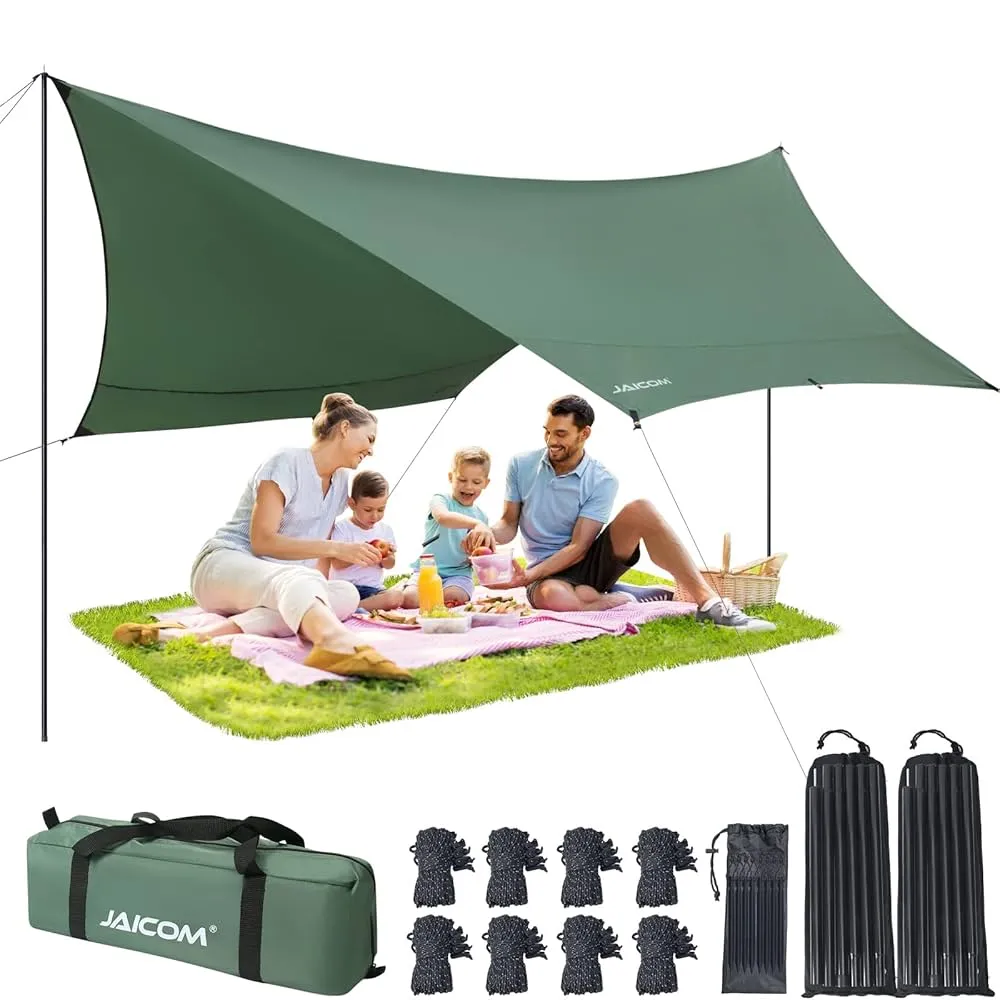
This comprehensive kit includes everything needed for immediate deployment, featuring waterproof 3000mm rating and UV protection. The included poles eliminate the need for finding suitable anchor points, making it perfect for camping in open areas or beaches. I've used this setup for group camping scenarios where extended coverage was essential.
Buy Now on AmazonSunyear Hammock Rain Fly
The Sunyear Hammock Rain Fly offers exceptional versatility for both hammock and ground tent applications. Its lightweight design makes it ideal for backpacking, while the multiple attachment points provide flexibility for various setup configurations. The 210D Oxford fabric with PU 3000mm coating delivers reliable waterproof protection.
Get This ProductREDCAMP Hammock Rain Fly 10x10ft
REDCAMP's offering combines premium materials with practical design features. The 10x10ft size provides excellent coverage for most camping scenarios, while the lightweight construction makes it suitable for backpacking applications. The reinforced stress points and quality hardware ensure long-term reliability.
Order from Amazon
Installation and Setup Tips
Proper installation of your replacement rain cover for tent is crucial for maximizing protection and ensuring long-term durability. Through years of experience setting up shelters in challenging conditions, I've developed techniques that consistently deliver reliable results regardless of weather conditions or terrain challenges.
Site preparation significantly impacts your cover's performance. Before deployment, clear the area of sharp objects, rocks, and debris that could damage the fabric. I always inspect the ground for potential puncture hazards and remove anything that could compromise the tarp's integrity. During a memorable camping trip in Arizona's Sonoran Desert, thorough site preparation prevented damage from hidden cactus spines and sharp rocks.
Proper tensioning prevents water pooling and reduces stress on attachment points. I recommend starting with moderate tension and gradually increasing as needed. Over-tensioning can stretch the fabric beyond its elastic limit, while insufficient tension allows water to collect in low spots. The ideal setup creates a slight slope that encourages water runoff while maintaining structural integrity.
Guy-line management is critical for stable installation. Use high-quality reflective guylines that remain visible in low light conditions. I prefer 3mm paracord for its strength and versatility, and I always carry spare lengths for field repairs. Proper guy-line angles should be approximately 45 degrees from the tarp edge to provide optimal holding power without excessive fabric stress.
Anchor point selection depends on available terrain features. Natural anchors like trees and rocks provide excellent holding power, but always protect the tarp from abrasion using padding or specialized tree-friendly straps. When natural anchors aren't available, use quality tent stakes appropriate for your soil conditions. I carry a variety of stake types to handle different terrains encountered during multi-day adventures.
Weather-specific considerations require different setup approaches. For high-wind conditions, use additional guy-lines and lower the tarp profile to reduce wind load. In snow conditions, maintain steeper angles to prevent accumulation, and regularly clear snow buildup to prevent structural overload. Rain setups benefit from slight slopes that encourage drainage while maintaining coverage. These considerations become particularly important when selecting appropriate replacement rain cover for tent systems for specific seasonal applications.
Maintenance during extended use involves regular inspection and adjustment. Check guy-line tension daily, as temperature changes and fabric settling can affect stability. Look for signs of wear at stress points, and address small issues before they become major problems. I perform thorough inspections each morning and evening, making adjustments as needed to ensure continued protection.
Troubleshooting Common Issues
Water pooling is perhaps the most common issue with tarp installations. This typically results from insufficient tension or improper angle selection. To address pooling, increase guy-line tension and adjust anchor points to create better drainage slopes. If pooling persists, consider repositioning the entire setup to take advantage of natural terrain features.
Flapping and noise in windy conditions can disrupt sleep and stress the fabric. Lower the tarp profile and add intermediate guy-lines to reduce surface area exposed to wind. Consider using shock cord sections in your guy-line system to absorb wind gusts and reduce constant tension fluctuations. This technique has proven invaluable during windy nights in exposed camping areas.
Condensation management requires attention to ventilation and fabric selection. Ensure adequate airflow around and under the tarp to prevent moisture buildup. Single-wall shelters are particularly susceptible to condensation, so maintain gaps between the tarp and tent fabric. During humid conditions, I often create ventilation channels using trekking poles or other supports to promote air circulation.
Conclusion
Selecting the right replacement rain cover for tent is an investment in your camping comfort and safety. Throughout my decades of outdoor adventures, I've learned that quality rain protection is not optional – it's essential for enjoyable camping experiences. The products and techniques discussed in this guide represent time-tested solutions that have proven their worth in real-world conditions.
Remember that the best rain cover is one that matches your specific camping style, weather conditions, and performance requirements. Whether you choose a heavy-duty tarp for extreme conditions or a lightweight option for backpacking adventures, proper installation and maintenance will ensure years of reliable service. The key is understanding your needs and selecting products that deliver the right balance of protection, durability, and convenience.
As you embark on your next camping adventure, take confidence in knowing that you have the knowledge and tools necessary to stay dry and comfortable, regardless of what Mother Nature brings. The investment in quality rain protection will pay dividends in camping enjoyment and peace of mind for years to come.
Ready to upgrade your camping protection? Start with one of our recommended products and experience the difference quality makes!