


Christmas in Italy: A Complete Guide to Traditions, Food, and Festivities
The Italian Christmas Season: Dates and Timeline
Unlike in many countries where Christmas celebrations begin right after Thanksgiving, the Italian Christmas season follows a more traditional Catholic calendar. The festive period officially begins on December 8th, the Feast of the Immaculate Conception (L'Immacolata Concezione), and extends until January 6th, the Epiphany, known locally as La Befana.
The Official Start: December 8th
December 8th marks the day when most Italian families traditionally set up their Christmas trees and decorations. As I discovered during my travels through Bel Paese, this public holiday sees cities across Italy officially unveiling their holiday lights and Christmas trees in main squares. In Rome, even the Pope participates in a special ceremony at the Spanish Steps, placing a wreath of flowers at the Column of the Immaculate Conception.
However, regional variations exist. In Taranto, Puglia, for instance, celebrations begin earlier on November 22nd (Santa Cecilia's Day), when families make and share pettole – deep-fried dough balls covered in sugar or salt. This delicious tradition signals the unofficial start of the Christmas season in this southern region.
The Christmas Period: December 24th-26th
The heart of the Italian Christmas celebration centers around three key days:
- Christmas Eve (La Vigilia) – December 24th: Italians observe this day with a large, traditional seafood feast. Following Catholic tradition, no meat is eaten on this day, purifying the body before the holy celebration. After dinner, many families attend Midnight Mass (La Messa di Mezzanotte).
- Christmas Day (Natale) – December 25th: This day is dedicated to family gatherings and elaborate multi-course meals featuring meat dishes. While Babbo Natale (Italian Santa Claus) might bring presents to children, gift-giving traditions vary by region.
- Santo Stefano – December 26th: This national holiday (Boxing Day) continues the celebrations with another family meal, often featuring leftovers creatively repurposed into new dishes.
The Grand Finale: New Year's and La Befana
The Christmas season continues through New Year's Eve (Capodanno), celebrated with fireworks and the tradition of wearing red underwear for good luck! But the season isn't truly over until January 6th – the Epiphany – when La Befana, a kind witch-like figure, delivers candy and small gifts to children's stockings. According to legend, La Befana was an old woman who declined to join the Three Wise Men on their journey to see baby Jesus. She later regretted this decision and now flies on her broomstick each year, leaving treats for good children and coal (actually sweet black candy) for those who misbehaved.
During my winter stays in Florence, I've noticed how this extended holiday season creates a magical atmosphere that lasts for nearly a month, allowing plenty of time to enjoy the special foods, traditions, and festivities that make an Italian Christmas so unique.
While Christmas in Italy stretches across these weeks, it's important to note that official holidays (when businesses and schools close) are limited to December 8th, 25th, 26th, January 1st, and January 6th. Many Italians strategically use their vacation days to create extended breaks during this festive period.
Unique Italian Christmas Traditions
Italian Christmas traditions blend religious customs, regional folklore, and family rituals into a rich cultural tapestry. Having spent several Christmas seasons exploring different regions of Italy, I've been fortunate to witness firsthand how these traditions vary from north to south, creating a diverse celebration that's uniquely Italian.
The Presepe: Italy's Beloved Nativity Scenes
Perhaps no Christmas tradition is more quintessentially Italian than the presepe (nativity scene). While nativity displays exist worldwide, Italians elevate them to an art form. St. Francis of Assisi is credited with creating the first living nativity scene in 1223 in the town of Greccio, making this tradition nearly 800 years old!
During my visit to Naples, I discovered that an entire street – Via San Gregorio Armeno – is dedicated year-round to artisans crafting intricate nativity figurines. These aren't limited to traditional biblical characters; you'll find figurines of politicians, celebrities, and sports stars alongside Mary, Joseph, and the shepherds. Neapolitan presepi often feature elaborate scenes depicting entire village life with tiny working fountains, lights, and dozens of characters.
In homes throughout Italy, setting up the presepe is a cherished family activity. Many families add pieces to their collection each year, with some presepi growing to impressive sizes. Churches and town squares also display life-sized presepi, with some villages like Greccio hosting living nativity scenes with hundreds of participants.
The Feast of Seven Fishes
On Christmas Eve, many Italian families observe "La Vigilia" with the Feast of Seven Fishes. This seafood extravaganza originates from the Catholic tradition of abstaining from meat before religious holidays. The number seven is symbolic, representing the seven sacraments, though some families serve more or fewer dishes.
During my Christmas in a coastal town near Bari, I enjoyed a magnificent spread that included fried salt cod (baccalà), octopus salad, marinated anchovies, pasta with clam sauce, mussels in broth, and grilled sea bass. Each region has its seafood specialties, making this feast diverse across Italy.
What struck me most about this meal was how it transformed religious abstinence into a celebrated culinary tradition – Italians have an exceptional talent for making even restrictions delicious!
Zampognari: The Bagpipers of Christmas
In Rome and southern Italy, zampognari (bagpipers) are a cherished Christmas tradition. These musicians dress as shepherds and play pastoral Christmas carols on their distinctive bagpipes. The tradition dates back centuries, when shepherds from mountain regions would come down to villages during the Christmas season to earn extra money by playing their instruments.
During my December stay in Rome, I encountered these musicians near the Spanish Steps and in various piazzas. Their haunting melodies create an atmospheric backdrop to the holiday season, connecting modern celebrations to Italy's rural past. If you're lucky enough to have them appear at your door, tradition calls for giving them a small tip!
These distinctive traditions are just a few examples of why experiencing Christmas in Italy feels so special and authentic. The focus on family, faith, and food creates a warm, inclusive atmosphere that welcomes visitors to participate in celebrations that have evolved over centuries but maintain their cultural heart.
Festive Decorations and Symbols
While Italian Christmas decorations share some similarities with those found in other countries, they also include unique elements that reflect Italy's cultural heritage. As someone who's photographed Christmas displays across Italy, from alpine villages in the north to sun-drenched towns in Sicily, I've been captivated by the distinctive way Italians adorn their homes and communities for the season.
Christmas Trees and Italian Innovations
While the Christmas tree (l'albero di Natale) wasn't historically part of Italian celebrations, it has been widely adopted in recent decades. Many Italian families now set up their trees on December 8th, the Feast of the Immaculate Conception. What makes Italian Christmas trees distinctive is often their placement – in Italy, you'll frequently find trees displayed on balconies and terraces, especially in apartments where space is limited.
Public Christmas trees in Italian piazzas are spectacular affairs. During my visit to Milan one December, I was stunned by the elegant tree in the Galleria Vittorio Emanuele II, adorned with thousands of Swarovski crystal ornaments and lights. Rome's tree in Piazza Venezia and Florence's in Piazza del Duomo are equally magnificent spectacles that draw crowds throughout the season.
For those interested in bringing Italian Christmas décor into their own homes, I recommend these beautiful ornaments that capture the essence of Italian holiday style:
Jim Shore Heartwood Creek Italian Santa Stone Resin Hanging Ornament
This beautifully detailed ornament captures the spirit of Italian Christmas traditions with its Santa figure styled in classic Italian colors. Hand-crafted from stone resin with the quality Jim Shore is known for, it makes a perfect addition to any holiday collection.
See on Amazon (*)The Presepe as Decoration
While I've discussed the cultural significance of nativity scenes in the traditions section, it's worth emphasizing their role as the centerpiece of Italian Christmas decorations. Unlike in many countries where the Christmas tree is the focal point, in Italian homes, the presepe often takes center stage.
Italian families display their nativity scenes on specially designated tables, mantels, or custom-built platforms. The most elaborate home presepi feature moss-covered landscapes, twinkling stars, miniature villages, and flowing water features. The figures range from antique heirlooms passed down through generations to new artisanal pieces purchased from Christmas markets.
In many homes, the baby Jesus figure isn't placed in the manger until midnight on Christmas Eve, and the Three Kings are gradually moved closer to the nativity scene, finally arriving on January 6th (Epiphany). This makes the presepe an interactive decoration that evolves throughout the Christmas season.
Kurt Adler 5-Inch Venice Cityscape Glass Ornament
This exquisite glass ornament features a detailed depiction of Venice's iconic canals and architecture. Hand-painted with vibrant colors, it brings a touch of Italian beauty to your Christmas tree and makes for a wonderful souvenir or gift for anyone who loves Italy.
See on Amazon (*)Light Displays and Street Decorations
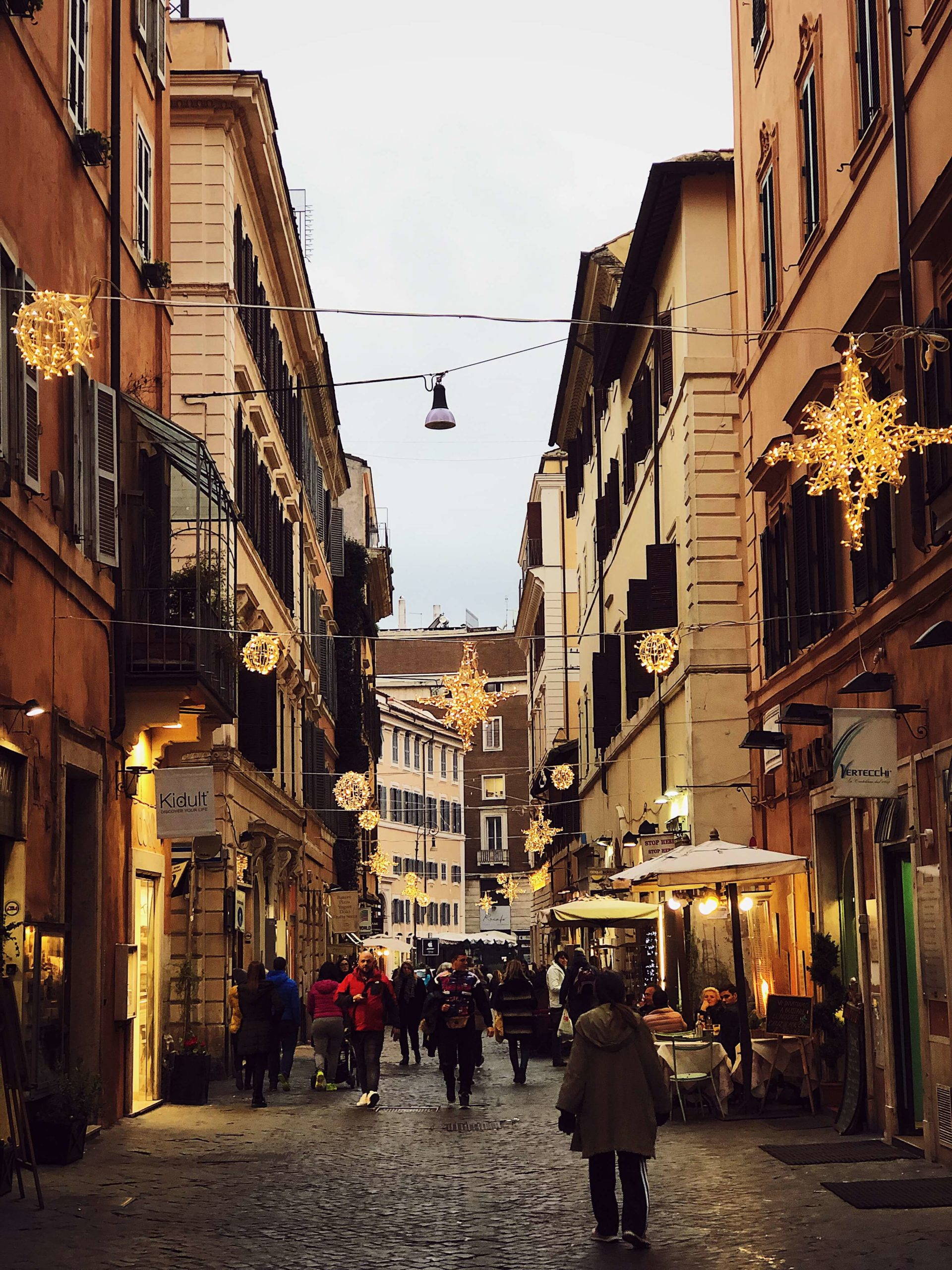
Italian cities and villages transform during the Christmas season with elaborate light displays called luminarie. These aren't just random strings of lights but carefully designed installations that often reflect local heritage. In southern regions like Puglia, luminarie are particularly spectacular, with intricate archways of lights creating tunnel-like pathways through city streets.
During my visit to Salerno, I was amazed by their annual "Luci d'Artista" festival, where entire neighborhoods become immersive light exhibits with different themes. The coastal town's seafront was transformed with sea creature light sculptures, while the historic center featured classical mythological scenes.
Even smaller towns compete to create memorable displays. In Italian village squares, you'll often find illuminated trees, light projections on historic buildings, and strands of lights crossing above streets to create a canopy of twinkling stars.
What I've come to appreciate about Italian Christmas decorations is how they balance religious significance, artistic expression, and community involvement. Whether it's the careful crafting of a family presepe or a town's collaborative light display, decorations in Italy are never merely ornamental – they're expressions of cultural identity and community pride.
Italian Christmas Food: A Culinary Celebration
If there's one aspect of Christmas in Italy that truly showcases the country's regional diversity, it's the food. Having sampled Christmas specialties from Milan to Palermo, I can attest that holiday menus vary dramatically depending on where you are. However, one constant remains: Italian Christmas food is abundant, meticulously prepared, and deeply connected to local traditions.
Christmas Eve: The Feast of Seven Fishes
As mentioned in the traditions section, the Christmas Eve dinner in Italy revolves around seafood. While called the "Feast of Seven Fishes" in English-speaking countries, Italians simply know it as "La Vigilia" (The Vigil). The seafood-focused meal stems from the Catholic practice of abstaining from meat before religious holidays.
Typical dishes vary by region but might include:
- Baccalà (salt cod) prepared various ways – fried, in tomato sauce, or as a salad
- Capitone (eel) – especially popular in Naples and Rome
- Fritto misto di mare (mixed fried seafood)
- Linguine alle vongole (pasta with clams)
- Insalata di mare (seafood salad) with octopus, shrimp, and calamari
During my Christmas Eve dinner with a family in Sicily, I noticed how the meal progressed through multiple courses: antipasti of marinated seafood, a pasta course with seafood sauce, main fish dishes, and finally dessert. The dinner lasted over four hours, with conversation and wine flowing abundantly throughout!
Christmas Day: Regional Feasts
Christmas lunch on December 25th is perhaps the most important meal of the season. Unlike Christmas Eve, this feast typically centers around meat dishes. The specific menu varies dramatically by region:
- Northern Italy: In regions like Lombardy and Piedmont, you might find stuffed turkey, roast veal, or bollito misto (mixed boiled meats served with various sauces)
- Central Italy: In Tuscany and Umbria, roast pork, lamb, or wild boar are common centerpieces
- Southern Italy: In Campania and Sicily, baked pasta dishes like lasagna or pasta al forno often precede meat courses
Regardless of region, the Christmas meal is structured in multiple courses: antipasti (appetizers), primi (first courses, usually pasta), secondi (main meat courses), contorni (side dishes), and finally dolci (desserts). Each family has their treasured recipes passed down through generations, making every Christmas table unique.
Italian Christmas Desserts
No discussion of Italian Christmas food would be complete without mentioning the signature desserts. While available nationwide, many have specific regional origins:
- Panettone: Originally from Milan, this tall, dome-shaped sweet bread is studded with candied fruits and raisins. Its distinctive fluffy texture comes from natural leavening that can take days to develop
- Pandoro: From Verona, this star-shaped golden bread (literally "bread of gold") has a rich, buttery flavor and is typically served dusted with powdered sugar
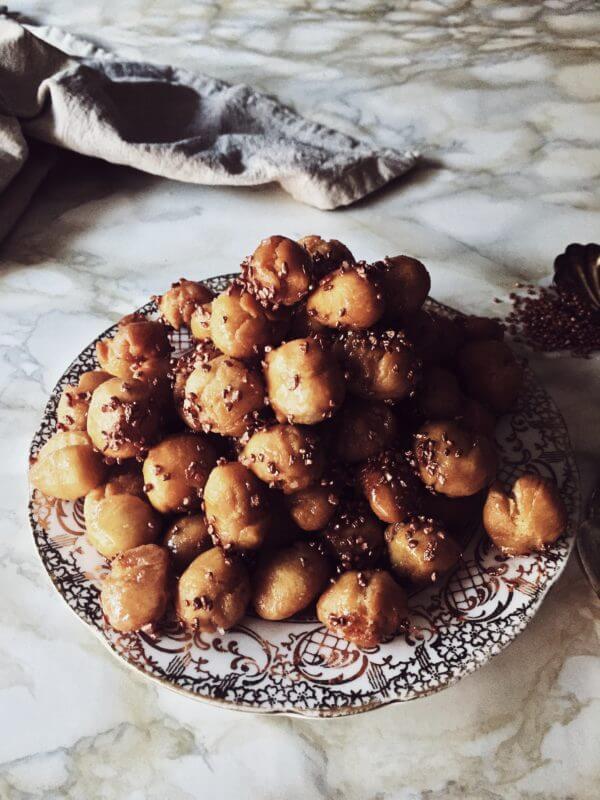
- Struffoli: A Neapolitan specialty of small, deep-fried dough balls coated in honey and decorative sprinkles
- Torrone: A nougat confection made with honey, egg whites, and nuts, particularly popular in northern regions
- Panforte: From Siena, this dense, spiced fruit and nut cake dates back to medieval times
Having sampled these treats across Italy, I can share that store-bought versions rarely compare to artisanal or homemade varieties. If you're visiting Italy during Christmas, seek out local pasticcerie (pastry shops) rather than supermarket versions of these traditional sweets.
Italy Symbols Colorful Christmas Ornament, Home Decor
This vibrant ornament features classic Italian symbols including the flag, landmarks, and cultural icons. It's a beautiful way to celebrate Italian heritage during the holidays and makes a thoughtful gift for anyone with connections to Italy.
See on Amazon (*)Befana Treats and New Year's Specialties
The extended Italian Christmas season includes special foods for New Year's Eve and Epiphany (January 6th):
- Cotechino con lenticchie: A New Year's dish of pork sausage with lentils, symbolizing good fortune for the coming year
- Zampone: Similar to cotechino but stuffed into a pig's trotter, another New Year's lucky food
- Befanini: Butter cookies shaped like La Befana or stars, often decorated with colored sprinkles
The centrality of food to Christmas in Italy cannot be overstated. Holiday meals are not just about nourishment but about preserving cultural heritage, bringing families together, and creating memories that last a lifetime. As one nonna told me in Florence, "We don't just eat at Christmas – we celebrate with food."
Best Places to Experience Christmas in Italy
While Christmas is celebrated throughout Italy, certain destinations offer particularly magical experiences during the holiday season. Based on my travels and research, here are the most enchanting places to experience an authentic Italian Christmas.
The Alpine Magic of Northern Italy
The northern regions of Italy, especially Trentino-Alto Adige, transform into winter wonderlands during the Christmas season. The Germanic influence in this region results in some of Italy's most spectacular Christmas markets.
In Bolzano, the Christmas market in Piazza Walther features wooden stalls selling handcrafted gifts, mulled wine (vin brulé), and regional specialties. The surrounding Dolomite mountains provide a picture-perfect snowy backdrop. When I visited, I was charmed by the blend of Italian and Austrian traditions, from the food to the music.
Merano hosts another exceptional Christmas market along the Passirio River, with its thermal baths offering a unique way to warm up after browsing the stalls. From November 24th until January 6th, this town becomes a festive paradise with light displays, ice skating, and musical performances.
Other notable northern destinations include Bard and Hône in Valle d'Aosta, where medieval villages are enhanced by festive light displays, and Candelo in Piedmont, which transforms its historic ricetto (medieval fortified area) into Santa's village.
Rome and Central Italy: Religious Heart of Christmas
Rome offers a profound Christmas experience focused on religious traditions. The Vatican's Christmas celebrations are world-famous, with the Pope's midnight Mass at St. Peter's Basilica broadcast globally. Tickets are extremely difficult to secure, but the Mass is also shown on large screens in St. Peter's Square.
During my December visit to Rome, I discovered that beyond the Vatican, the city is filled with beautiful nativity scenes in churches and piazzas. The historic center is adorned with lights, and Piazza Navona hosts a Christmas market with carousels and stalls selling traditional sweets.
In Umbria, the town of Greccio holds special significance as the site of the first living nativity scene created by St. Francis in 1223. Each year, the town reenacts this historic event with hundreds of participants. It's a deeply moving experience that connects visitors to the origins of the nativity tradition.
Another Central Italian gem is Gradara in the Marche region, whose medieval castle and fortified village are beautifully decorated during Christmas. The guided walks through the alleys and castle offer insights into local history while festive decorations add a magical atmosphere.
Southern Charm: Naples and Beyond
Naples is perhaps Italy's Christmas craftsmanship capital. Via San Gregorio Armeno, known as "Christmas Alley," is lined with workshops creating handcrafted nativity figures year-round. December brings crowds of visitors eager to purchase unique pieces for their presepi. I spent hours wandering this street, amazed by the artisans' skill and the creative modern figures alongside traditional ones.
The Amalfi Coast offers a different kind of Christmas charm. Towns like Positano and Amalfi might be quieter than in summer, but their Christmas lights reflected in the Mediterranean create a magical atmosphere. Without the summer crowds, visitors can experience local traditions more intimately.
In Abruzzo, the town of Villetta Barrea hosts a unique underwater nativity scene in Lake San Domenico. On December 26th, divers carry ceramic statues representing the Holy Family to the lake bottom, creating a truly distinctive celebration.
Sicily and Island Celebrations
Sicily offers its own distinctive Christmas traditions. In Erice, the Village of Nativity Scenes transforms the entire medieval town with presepi displayed in churches, shop windows, and along cobblestone streets. These range from traditional to artistic interpretations using local materials.
Sicilian Christmas food deserves special mention – local specialties like buccellato (fig and nut-filled pastry) and sfincione (thick Sicilian pizza often served during holidays) make the island's celebrations uniquely delicious.
While many tourists visit Italy during summer, experiencing Christmas in Italy reveals a more authentic side of Italian culture. The winter months bring fewer crowds, allowing for more meaningful interactions with locals and a deeper appreciation for traditions that have evolved over centuries.
Italy Ornament Wooden Christmas Tree Decoration with Italian Town Names
This elegant wooden ornament shaped like Italy features the names of famous Italian cities and towns. At 6 inches tall, it's a substantial decoration that celebrates Italy's rich geography and makes a perfect gift for travelers or anyone with Italian heritage.
See on Amazon (*)My Experience: Christmas the Italian Way
My first Christmas in Italy was unplanned – a cancelled flight turned a brief stop in Florence into a weeklong immersion in Tuscan holiday traditions. What began as travel frustration became one of my most cherished memories, as a local family I had befriended insisted I join their celebrations rather than spend Christmas alone at a hotel.
A Tuscan Christmas Eve
My Italian Christmas journey began in a centuries-old apartment near the Ponte Vecchio, where three generations gathered for Christmas Eve dinner. The meal started around 7 PM and didn't conclude until nearly midnight – just in time for some family members to attend Mass at the nearby church of Santo Spirito.
The seafood feast followed tradition – seven different fish preparations, from simple grilled orata (sea bream) to an elaborate seafood risotto that the grandmother had begun preparing hours before. Between courses, I learned to play tombola, the Italian version of bingo, with dried beans as markers and small coins as prizes.
What struck me most was the effortless way the evening flowed – courses appeared without any apparent stress, conversation never faltered despite my limited Italian, and even young children remained at the table, participating in the celebration rather than being segregated at a "kids' table."
Lessons from Italian Christmas Celebrations
Through subsequent Christmas seasons spent in different regions of Italy, I've gathered insights that have transformed my own holiday celebrations back home:
- Extend the season – The Italian approach of celebrating from early December through January 6th reduces the pressure of having everything perfect for a single day
- Focus on handmade – Whether it's food or decorations, items created by hand carry special meaning
- Embrace regional variations – There's no single "right way" to celebrate; traditions evolve and adapt
- Prioritize togetherness – The most memorable aspects of Italian Christmas celebrations always center around shared experiences
During a memorable Christmas in Naples, I witnessed how even strangers were welcomed into celebrations. Walking through the Spanish Quarter on Christmas Day, my friend and I were invited into a home where a large family gathering was taking place. Despite not knowing us, they insisted we join them for dessert and coffee. This openness and hospitality exemplify the true spirit of an Italian Christmas.
What Travelers Say: Reviews from Christmas in Italy
I'm not alone in my appreciation for Italian Christmas traditions. Here are perspectives from other travelers I've met or whose reviews I've found valuable:
"We spent Christmas in Bolzano and it was magical. The Christmas market had unique handcrafted gifts you can't find anywhere else, and the blend of Italian and Austrian traditions made the food experience incredible. Definitely try the vin brulé with a slice of strudel while watching the alphorn players in the main square."
— Maria S., Reddit Christmas Travel Forum
"Our family celebrated Christmas in Rome, and attending the Pope's Midnight Mass was a once-in-a-lifetime experience. Even though we're not Catholic, the ceremony was moving and beautiful. My tip: request tickets months in advance through the Prefecture of the Papal Household, and have a backup plan to watch in St. Peter's Square if you can't get seats inside."
— James T., Quora travel community
"Don't miss the living nativity scene in Custonaci, Sicily if you're in the area! They transform a natural cave into Bethlehem with over 160 participants recreating ancient crafts and customs. It's held in the days after Christmas through early January. We visited last year and my children still talk about it – so much more memorable than any gift they received."
— Sophia R., Amazon review of Italy travel guide
Pros and Cons of Celebrating Christmas in Italy
For those considering a Christmas trip to Italy, here's my balanced assessment based on personal experience:
Pros
- Authentic cultural immersion into centuries-old traditions
- Fewer tourists compared to summer months
- Spectacular decoration displays, especially in historic centers
- Exceptional seasonal food and regional specialties
- Christmas markets offering unique artisanal gifts
- Potential for snow in northern regions
Cons
- Many family-owned businesses close on December 24-26
- Reduced public transportation schedules on holidays
- Cold, potentially rainy weather in many regions
- Popular Christmas events may require advance booking
- Higher prices for accommodations in tourist destinations
- Language barriers may be more challenging during family-oriented holidays
My recommendation? If you're seeking an authentic Christmas in Italy experience, embrace the differences rather than expecting traditions to match those from home. Research local customs for your specific destination, learn a few holiday-specific Italian phrases, and most importantly – be open to unexpected invitations and experiences.
Buon Natale Italian Christmas Banner for Italian Christmas Decorations
This festive banner with "Buon Natale" (Merry Christmas in Italian) instantly adds Italian holiday flair to your celebrations. Made from quality materials, it's perfect for home decorations, Italian-themed Christmas parties, or as a gift for anyone who loves Italian culture.
See on Amazon (*)Conclusion
Christmas in Italy is more than just a holiday – it's a rich cultural experience that weaves together faith, family, artistry, and gastronomy. From the Alpine villages of the north to the sun-washed towns of Sicily, Italians celebrate the season with distinctive regional traditions while maintaining the core values of togetherness and celebration.
What makes Italian Christmas celebrations so special is their authenticity. In an increasingly commercialized holiday season worldwide, Italian traditions remain deeply connected to their historical and cultural roots. The multi-week celebration allows for a more relaxed pace, with time to appreciate each aspect of the season rather than focusing all expectations on a single day.
Whether you're planning a trip to experience Christmas in Italy firsthand or simply looking to incorporate some Italian traditions into your own celebrations, I hope this guide has provided useful insights. The beauty of Italian Christmas customs is that many can be adapted to your own circumstances – from preparing a seafood feast on Christmas Eve to creating a hand-crafted presepe or simply extending your celebrations through Epiphany.
As we say in Italy, "Natale con i tuoi, Pasqua con chi vuoi" – Christmas with your family, Easter with whomever you wish. This popular saying captures the essential nature of Italian Christmas: it's fundamentally about honoring connections with family and heritage, making it the perfect time to create memories that will last a lifetime.
Whether you're exploring the Christmas markets of South Tyrol, attending Midnight Mass at the Vatican, or simply enjoying a slice of panettone with loved ones, the spirit of an Italian Christmas can be found in the shared moments of joy and connection that make this season truly magical.
Buon Natale a tutti! (Merry Christmas to all!)
Frequently Asked Questions
When does the Christmas season start and end in Italy?
The Italian Christmas season officially begins on December 8th (the Feast of the Immaculate Conception) when most families set up their Christmas trees and decorations. It continues through Christmas Eve and Christmas Day, then extends to January 6th (Epiphany), when La Befana brings gifts to children. While the entire period spans about a month, official holidays are limited to December 8th, 25th, 26th, January 1st, and January 6th.
What is a traditional Italian Christmas dinner?
Italian Christmas meals vary by region, but typically include multiple courses. Christmas Eve dinner (La Vigilia) traditionally features seafood dishes with no meat, often called the Feast of Seven Fishes. Christmas Day lunch usually includes meat-based courses, with dishes like tortellini in broth, roasted meats, and vegetable sides. Panettone and pandoro are popular desserts nationwide, alongside regional sweet specialties.
Do Italians give gifts on Christmas Day?
Gift-giving traditions vary across Italy. In some families, gifts are exchanged on Christmas Eve, while others open presents on Christmas morning. In many areas, especially in the north, gifts are associated with Santa Lucia (December 13th) or Baby Jesus rather than Santa Claus (although Babbo Natale is becoming more common). Additionally, children often receive gifts on January 6th from La Befana, a witch-like figure who fills stockings with candy or coal.
What are the best places to spend Christmas in Italy?
For Christmas markets and snowy landscapes, the northern regions like Trentino-Alto Adige (particularly Bolzano and Merano) are ideal. For religious celebrations, Rome offers the Vatican experience and beautiful nativity scenes throughout the city. Naples is famous for its artisanal nativity figurines and Christmas Alley. Smaller towns like Gubbio (with the world's largest Christmas tree of lights) and Greccio (site of the first living nativity) offer unique experiences with fewer tourists.
What is the significance of the presepe (nativity scene) in Italian Christmas traditions?
The presepe is central to Italian Christmas celebrations, often more important than the Christmas tree. This tradition dates back to 1223 when St. Francis of Assisi created the first living nativity scene in Greccio. Today, Italian families display elaborately designed nativity scenes featuring not just the Holy Family but often entire village settings. Churches and public squares host life-sized presepi, and some towns organize living nativity scenes with hundreds of participants. Naples is particularly famous for its handcrafted nativity figurines, which now include contemporary characters alongside traditional ones.