

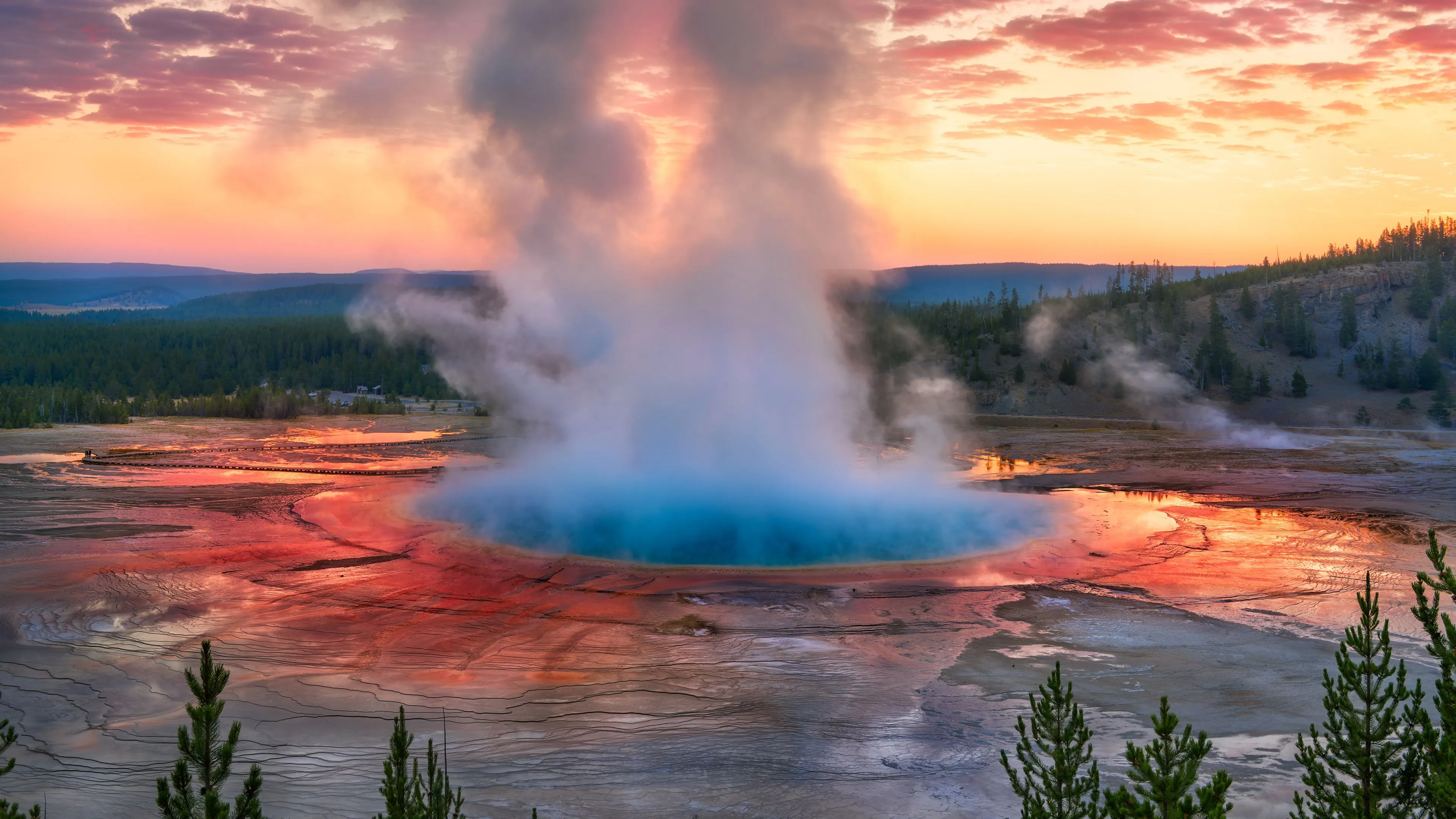
After spending countless hours exploring the hydrothermal wonders of Yellowstone National Park geysers during my multiple visits over the past decade, I can confidently say there's no place on Earth quite like this geothermal paradise. From witnessing Old Faithful's predictable eruptions to discovering hidden gems in remote thermal basins, this comprehensive guide shares everything you need to know about experiencing these natural marvels, backed by scientific insights and practical visitor tips gathered through extensive first-hand exploration.
Understanding Yellowstone's Geysers: Nature's Underground Pressure Cookers
During my first visit to Yellowstone National Park geysers in 2012, I was absolutely mesmerized by the raw power and beauty of these natural phenomena. Standing before Old Faithful that crisp September morning, watching thousands of gallons of superheated water rocket skyward, I realized I was witnessing something truly extraordinary. What makes Yellowstone National Park geysers so special isn't just their spectacular eruptions, but the incredibly rare geological conditions that create them.
Yellowstone National Park geysers exist because of a perfect storm of geological factors. The park sits atop the Yellowstone Caldera, a massive volcanic hotspot where molten rock lies just 3-8 miles beneath the surface. This underground furnace heats groundwater to temperatures exceeding 400°F (204°C). But heat alone doesn't create geysers – you need specific plumbing systems with underground chambers and narrow constrictions that act like natural pressure valves.
What truly amazed me during conversations with park rangers was learning that Yellowstone National Park geysers represent more than half of all active geysers on Earth. Out of approximately 1,000 geysers worldwide, over 500 call Yellowstone home. This concentration is absolutely unique – no other location on our planet hosts such an incredible diversity of hydrothermal features in such a compact area.
The science behind Yellowstone National Park geysers involves a delicate balance of water supply, heat source, and underground plumbing. When water seeps down through rock fractures, it gets superheated by the magma chamber below. The weight of overlying water prevents boiling until steam bubbles finally overcome the pressure, triggering explosive eruptions that can reach heights of over 300 feet. Understanding this process enhanced my appreciation immensely during subsequent visits.

Old Faithful: The Crown Jewel of Yellowstone National Park Geysers
No discussion of Yellowstone National Park geysers would be complete without dedicating significant attention to Old Faithful, the world's most famous geyser. I've witnessed over two dozen Old Faithful eruptions during my various visits, and each one still gives me goosebumps. What makes Old Faithful special among Yellowstone National Park geysers isn't its size – Steamboat Geyser in Norris Basin erupts much higher – but its remarkable predictability.
Currently, Old Faithful erupts approximately every 90 minutes, with intervals ranging from 60 to 110 minutes. During my summer 2023 visit, I timed several eruptions and found them remarkably consistent with park predictions. The geyser shoots 3,700 to 8,400 gallons of boiling water 106 to 185 feet into the air, lasting between 1.5 to 5 minutes. Pro tip from my experience: eruptions lasting less than 2.5 minutes typically have shorter intervals (around 60 minutes), while longer eruptions are followed by 90-minute intervals.
What I find fascinating about Old Faithful among all Yellowstone National Park geysers is its isolation from other thermal features. Unlike many geysers that share underground plumbing systems, Old Faithful operates independently, contributing to its reliability. Rangers explained to me that this unique characteristic makes it one of only six predictable geysers in the entire park, despite Yellowstone hosting over 500 active geysers.
My best viewing experiences came from three different vantage points. The traditional boardwalk offers front-row seats but gets extremely crowded (arrive 30 minutes early). For a unique perspective with fewer crowds, I highly recommend the short hike to Observation Point on Geyser Hill – the elevated view provides stunning photography opportunities. The Old Faithful Inn's viewing deck offers comfortable seating with refreshments, perfect for families or those preferring amenities while watching this star among Yellowstone National Park geysers.
Ready to plan your Old Faithful experience?
Book Your Yellowstone AdventureUpper Geyser Basin: The Heart of Yellowstone National Park Geysers
The Upper Geyser Basin stands as the crown jewel of Yellowstone National Park geysers, containing the highest concentration of geothermal features on Earth. Within just one square mile, over 150 thermal features exist, including more geysers than anywhere else in the world. During my extensive exploration of this basin, I discovered that spending a full day here reveals layer upon layer of geological wonders.
Beyond Old Faithful: Hidden Gems in the Basin
While Old Faithful draws the crowds, the Upper Geyser Basin hosts numerous other spectacular Yellowstone National Park geysers. Grand Geyser, which I was fortunate to witness during my 2022 visit, holds the title of the world's tallest predictable geyser, erupting up to 200 feet high. The eruption sequence is absolutely mesmerizing – multiple bursts building to a crescendo that can last up to 12 minutes.
Castle Geyser, with its distinctive cone resembling medieval ruins, provides another highlight among Upper Geyser Basin's Yellowstone National Park geysers. During my morning walk along the Firehole River boardwalk, I encountered this magnificent geyser mid-eruption. The cone-type geyser erupts roughly every 10-12 hours, reaching heights of 90 feet and lasting about 20 minutes, followed by a powerful steam phase.
Riverside Geyser offers perhaps the most photogenic setting among all Yellowstone National Park geysers. Located along the Firehole River, this geyser erupts at a 75-degree angle across the water, often creating stunning rainbows in its mist. I spent an afternoon waiting for its approximately 6-hour interval to witness this natural artistry – absolutely worth the patience for any photography enthusiast.
Morning Glory Pool, though not technically one of the active Yellowstone National Park geysers, deserves mention as the basin's most iconic hot spring. The 1.5-mile walk from Old Faithful to Morning Glory Pool passes numerous geysers and provides an excellent introduction to the diversity of Upper Geyser Basin's thermal features. Early morning visits offer the best lighting and smaller crowds for photography.
Grand Prismatic Spring & Midway Geyser Basin: Nature's Rainbow
While Grand Prismatic Spring isn't technically one of the erupting Yellowstone National Park geysers, it absolutely deserves prominent placement in any comprehensive guide to the park's hydrothermal features. As the largest hot spring in the United States and third-largest in the world, Grand Prismatic Spring represents the pinnacle of natural beauty within Yellowstone's geothermal landscape.
The Science Behind the Colors
The rainbow colors surrounding Grand Prismatic Spring result from thermophilic bacteria and algae that thrive at different temperatures. During my conversations with park naturalists, I learned that the deep blue center reaches temperatures around 189°F (87°C) – too hot for most life forms. As water flows outward and cools, different microbial communities create distinct color bands: yellow and orange algae in the intermediate zones, transitioning to deeper greens and browns in the cooler outer edges.
Midway Geyser Basin, home to Grand Prismatic Spring, also hosts Excelsior Geyser, one of the more interesting features among Yellowstone National Park geysers. While currently dormant as an active geyser, Excelsior functions as a massive hot spring, discharging over 4,000 gallons of scalding water per minute into the Firehole River. Historical records show this feature once erupted as a geyser reaching 300 feet high during the 1880s.
For the best Grand Prismatic experience, I recommend two viewing approaches. The boardwalk trail provides up-close access to appreciate the spring's massive scale – 370 feet in diameter and over 121 feet deep. However, the elevated overlook accessed via the Fairy Falls trail offers the iconic aerial perspective seen in most photographs. The 0.8-mile hike requires moderate effort but rewards visitors with unparalleled views of this natural wonder.
Timing your Grand Prismatic visit requires strategic planning. Morning hours often feature heavy steam that obscures the colorful bacterial mats, while midday sun provides optimal lighting for photography. However, midday also brings the largest crowds. During my multiple visits, I found late afternoon offers the best compromise between good lighting and manageable crowds, especially important given the extremely limited parking at Midway Geyser Basin.
Norris Geyser Basin: The Hottest and Most Dynamic of Yellowstone National Park Geysers
Norris Geyser Basin holds the distinction of being the hottest and most dynamic thermal area among all Yellowstone National Park geysers. During my early morning exploration in October 2023, the basin felt otherworldly – steam rising from dozens of features, the ground literally hissing and bubbling beneath my feet. This constantly changing landscape represents one of the most acidic thermal areas in the park, creating unique conditions for some truly spectacular geysers.
Steamboat Geyser: The World's Tallest Active Geyser
Steamboat Geyser stands as the crown jewel among Norris Basin's Yellowstone National Park geysers and indeed, among all geysers worldwide. As the world's tallest active geyser, Steamboat can reach heights exceeding 300 feet – nearly twice the height of Old Faithful's maximum eruptions. While I haven't been fortunate enough to witness a major Steamboat eruption, rangers shared that these spectacular displays can last from 3 to 40 minutes, followed by powerful steam phases lasting hours.
What makes Steamboat particularly fascinating among Yellowstone National Park geysers is its unpredictability. After decades of dormancy, the geyser entered an active phase beginning in 2018, with over 40 eruptions recorded in some years. During my visits, even minor steam eruptions from Steamboat create an impressive display. The anticipation and uncertainty add excitement that you don't experience with more predictable geysers like Old Faithful.
Norris Basin divides into two distinct areas: the Back Basin (where Steamboat resides) and Porcelain Basin. Porcelain Basin offers the most dramatic introduction to Norris's thermal features, with its stark white and gray landscape created by silica deposits. The constant activity here – steaming vents, bubbling pools, and occasional small eruptions – provides visitors with an excellent overview of hydrothermal processes.
During my explorations of Norris's Yellowstone National Park geysers, I particularly enjoyed Echinus Geyser, one of the largest acid-water geysers in the world. While currently irregular, when active, Echinus creates fountain-type eruptions lasting several minutes. The surrounding area showcases the unique ecosystem that develops around acid thermal features, with specialized plant life that thrives in these harsh conditions.

Planning Your Ultimate Yellowstone National Park Geysers Adventure
After a decade of exploring Yellowstone National Park geysers across all seasons, I've developed strategic approaches that maximize your experience while minimizing common frustrations. The key to a successful geyser-focused trip lies in understanding timing, crowd patterns, and prioritizing must-see features based on your interests and physical capabilities.
Best Times to Visit Yellowstone National Park Geysers
Seasonal timing dramatically impacts your Yellowstone National Park geysers experience. Summer months (June-August) offer full accessibility and the longest daylight hours, but also bring massive crowds and parking challenges. During my peak summer visits, I arrived at popular areas like Old Faithful and Grand Prismatic before 8 AM to secure parking and enjoy smaller crowds. Late September through October provides my favorite combination of accessible roads, minimal crowds, and dramatic weather that enhances thermal feature visibility.
Winter visits to Yellowstone National Park geysers offer magical experiences but require different strategies. Only the northern park roads remain open to regular vehicles, limiting access to Mammoth Hot Springs and the Northeast Entrance area. However, guided snowcoach tours provide winter access to Old Faithful and other key thermal areas. I'll never forget watching Old Faithful erupt during a February snowstorm – the contrast between steaming water and falling snow created an ethereal atmosphere impossible to experience any other season.
For photographers seeking optimal conditions at Yellowstone National Park geysers, early morning and late afternoon provide the best lighting. Morning hours also offer increased wildlife activity around thermal areas, where animals seek warmth during cooler periods. The "golden hour" before sunset creates particularly stunning photography opportunities at colorful features like Grand Prismatic Spring and the terraces at Mammoth Hot Springs.
Safety remains paramount when exploring Yellowstone National Park geysers. These features involve boiling water, unstable ground, and toxic gases. Always stay on designated boardwalks and trails, supervise children closely, and maintain safe distances from thermal features. During my experiences, I've witnessed several dangerous situations where visitors ignored safety protocols. Remember that water temperatures in these features often exceed 200°F and can cause severe burns instantly.
Ready to Experience Yellowstone's Geothermal Wonders?
Get the essential gear and guides for your Yellowstone adventure
Essential Yellowstone GuidesConclusion
Exploring Yellowstone National Park geysers has provided me with some of the most awe-inspiring experiences of my life. From the reliable spectacle of Old Faithful to the unpredictable power of Steamboat Geyser, these hydrothermal wonders represent one of our planet's most extraordinary geological phenomena. The concentration of over 500 active geysers in this single park creates opportunities for discovery and wonder that exist nowhere else on Earth.
The diverse thermal basins each offer unique characteristics that reward extended exploration. Whether you're marveling at the colorful bacterial mats of Grand Prismatic Spring, hiking to remote geysers in the backcountry, or simply sitting peacefully beside a bubbling hot spring, Yellowstone National Park geysers provide connections to our planet's dynamic geological processes that continue to shape our world.
As climate change and increased visitation present new challenges for preserving these features, responsible tourism becomes increasingly important. By following Leave No Trace principles, staying on designated trails, and respecting the fragile thermal features, we ensure that future generations can experience the same wonder and excitement that Yellowstone National Park geysers have provided visitors for over 150 years.
I encourage every visitor to approach Yellowstone National Park geysers with curiosity, respect, and patience. These natural timepieces operate on geological schedules that remind us of our place in the vast scope of Earth's history. Take time to truly observe, listen, and appreciate these remarkable features – they offer perspectives on our planet's power and beauty that will stay with you long after your visit ends.